There is a children’s story that starts with “If you give a mouse cookie,” perhaps an easy parallel to feeding this artist an idea.
Recently, an angry woman called me an “idealist” in a tone that suggested she thought this word was dirty. The circumstances leading up to her spitting out this label and the conversation that followed it have been rolling around in my mind ever since.
The story I share with you tonight is simple. It is a tale of privilege and unintended consequences, an illustration of a minor revolt from this member of the creative class. The scene I will set paints me as I am: a girl who sometimes steps on toes as she speaks her mind. My social graces are a fragile facade. In certain circumstances, they crack quickly.
A lover of champagne and elegance, I masquerade well as a socialite. However, silk chiffon is a thin veneer. As the night wore on, my attire did little to conceal the activist artist underneath.
Imagine you sit in the Hamptons, your belly full of gourmet food and expensive wine. I sit to the left of you at the table tonight. My position, perhaps accidental, is not without significance.
Around us is a table of good-looking international intellects. In each seat sits men and women who have been given abundant wealth and opportunities, their blessings far beyond the wildest imaginations of an average American.
Under the candlelight, listening, I sit nibbling on my salad.
As the dinner dishes are cleared away and the plates set for dessert, a handsome lawyer of Dutch descent tells a story that, by the mere retelling, perpetuates institutional racism.
Unable to let the moment go unchecked, I call him out.
As you might well imagine, as soon as I say something, a frisson of electricity shoots around the room.
Eyebrows go up in silent disapproval. Quiet expressions, as loud as a burglar alarm, broadcast that I had overstepped.
The man frowned in thought.
I could honestly tell he hadn’t intended to be racist. However, his story was told from the perspective of the white male privilege he was born with, and the consequences of his words were the same.
When I stepped in, I said he should never tell that story again. Then I explained why.
To his credit, he acknowledged my point, and perhaps in saying something, I will eliminate this tale from his future dinner dialogues.
Alas, not everyone was as open to my cultural correction.
The man agreed with me. Yet despite that, an angry, newly divorced, white woman instantly rose to his defense. She got upset on his behalf. She jumped in and immediately started talking down to me.
It was then that she called me an “idealist,” like it was a trait I should be ashamed of.
She said that, as an artist, I could not possibly understand the complexities of corporate life.
She talked on and on. Thankfully, I cannot recall everything she said. Her condescending superior tone made listening with any real interest increasingly challenging.
Just as I was dismissing her, she was attempting to dismiss me.
She tried to make me feel that because I was younger than her, less rich than her, that I was somehow inferior to her.
Watching her anger rise, I couldn’t help but feel bad for her. Her mannerisms all night made it obvious that she was the type of woman who never had many female friends.
Maybe she had too much wine. Maybe she had a bad day, a bad week, a bad year.
Maybe she resented my youth, my optimism, or the fact that the man in question was attracted to me over her.
Either way, she certainly didn’t see that her reaction illustrated how narrow-minded one can be when one wears the blinders of elitism.
I felt a little sad for her certainly, but too many buttons were punched as she narrowed her eyes and tried to hammer home whatever point she wanted to make.
Anyone who knows me knows I am not the type to demure meekly when challenged.
Emily Post would most likely have said that I could have let the moment pass, that I shouldn’t have said anything at all. Many might argue that I should have known my place, that as the youngest and least accomplished at the table, I was rude to stir up trouble.
This may be true.
I am the first to admit I am not yet fully domesticated.
Gentlemen: Do not let my fair hair deceive you. I am not the Stepford wife you seek.
You can keep your comfortable Connecticut suburbs, the white picket fence, and your Upper East Side townhouse.
This trophy does not want to be your next wife.
My Brooklyn studio suits me just fine. The wild child you see flashing in my eyes won’t push down my arm as it springs up in objection.
Of course, I didn’t say all this.
Instead, I explained that, yes, I am an idealist. It is my job as an artist to speak up and redefine boundaries.
Having the freedom to challenge institutional norms is a gift that I get as an artist. For the sake of my hosts and the peace of the party, I let the argument end there. I picked up my rosé, silencing myself with a sip.
However, in my head, I telepathically explained:
“I traded your suits and stable paychecks for the permission to be passionate, for the opportunity to chase my dreams, for the chance to create in a self-made world brimming with romanticism and optimism. I wear my badge of idealism with pride. I shine my hope in the face of your negativity.”
While the other guests spooned their bites of apple pie, sparks of challenge danced under the surface, energizing the room.
If anyone looked, I am sure the thought bubbles above my head were bold and easy to read.
In the case of the angry lady, I am certain my argument fell on deaf ears.
Sometimes, I create beauty; sometimes, I create controversy. Sometimes I shock, sometimes I delight. The creative life might not be conventional, but in the famous words attributed to the late great Marilyn Monroe, ‘it’s better to be absolutely ridiculous than absolutely boring.’
Call me challenging or see me as enchanting; like beauty, perspective is in the eye of the beholder.
As an artist, I often take my experiences, reprocess them, repackage them and share them with a wider audience.
When I paint, I hope my images will provoke new thoughts in my audience. Tonight, as I tell this tale, I give my words a chance to paint a story my brushes cannot capture.
Examining myself from this later, more objective perspective, I can see that I was uncomfortable with a story and, in reaction, created an uncomfortable conversation of conflict.
Flawed and complex, I was a woman adrift. In Sag Harbor, I sat attracted to the glow of glitz yet at odds with the decadence of my fellow diners.
Much to my dismay, we live in an era of increasing inequality. The ideal world of peaceful coexistence seems increasingly distant in America these days.
As a lone artist, I cannot change the thoughts and words of all those who perpetuate this problem.
I might not have the power to do much, but I can raise my voice even when it is uncomfortable.
I can stand firm and not back down to those who challenge me with their anger.
I can unapologetically retell the stories I experience in the hopes that my points may be heard by other, more receptive ears.
Later that night, I sat at the water’s edge, mulling over my moment and throwing stones of despair into the brackish bay. I thought of the troubles of our times, pondered politics and feminism, wondered what to do about the rising tide of racism sweeping across the nation, and considered my personal calls to action: my painted protests, my minor
revolts.
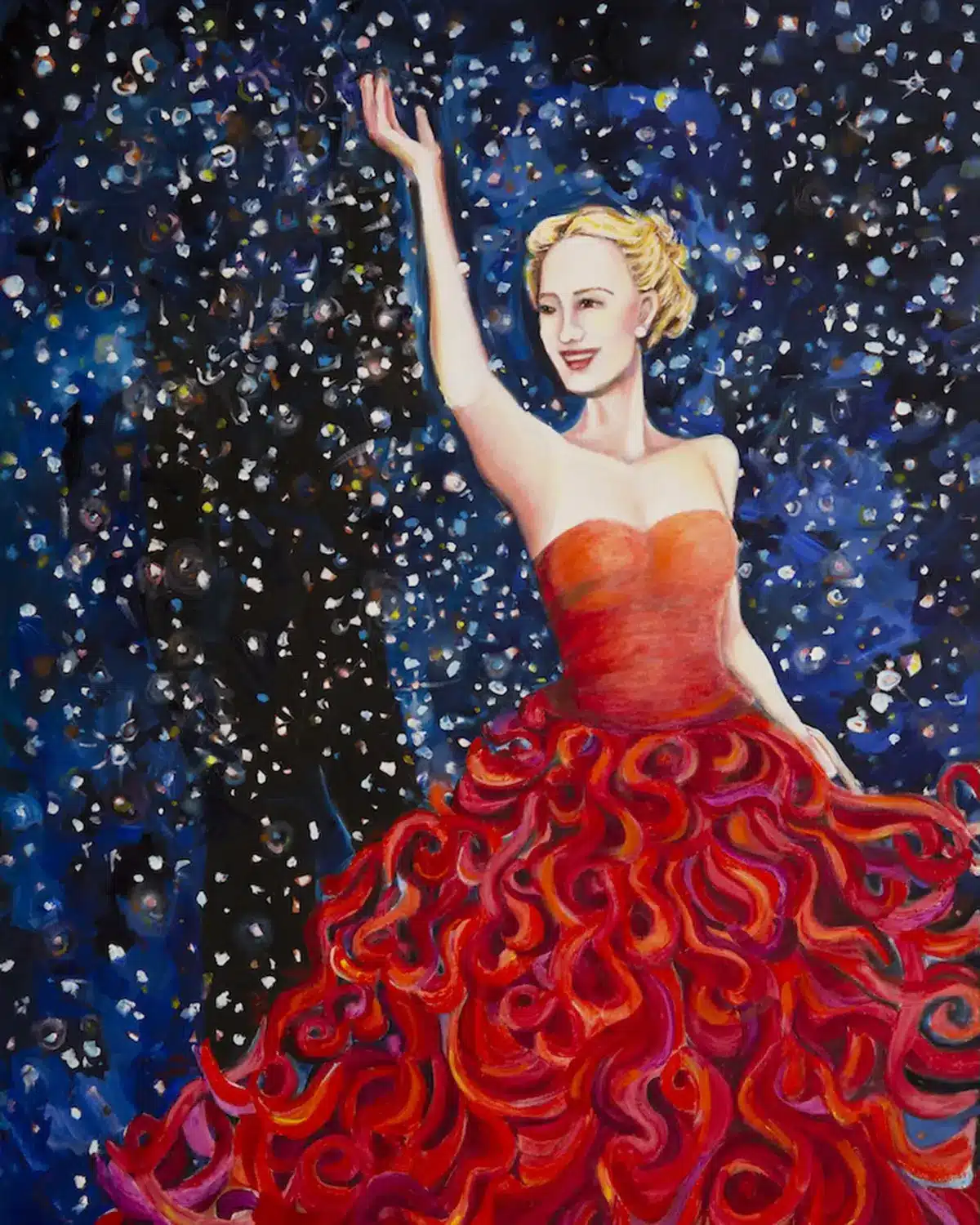
And then I got distracted from my heartache by the beauty of the setting before me. I watched with wonder as the stars sparkling in the sky were reflected in the dark sea.
I sighed in delight at the mirrored moon on the water as I lost my melodrama in the bliss before me.
I smiled at the heavens and gave thanks for my artistic eye.
I breathed deeply and blew a kiss to the heavens. I went to bed content, filled with gratitude, my idealism renewed and restored, ready for another day.
Commitment is hard. Start with this free short story collection.