TLDR
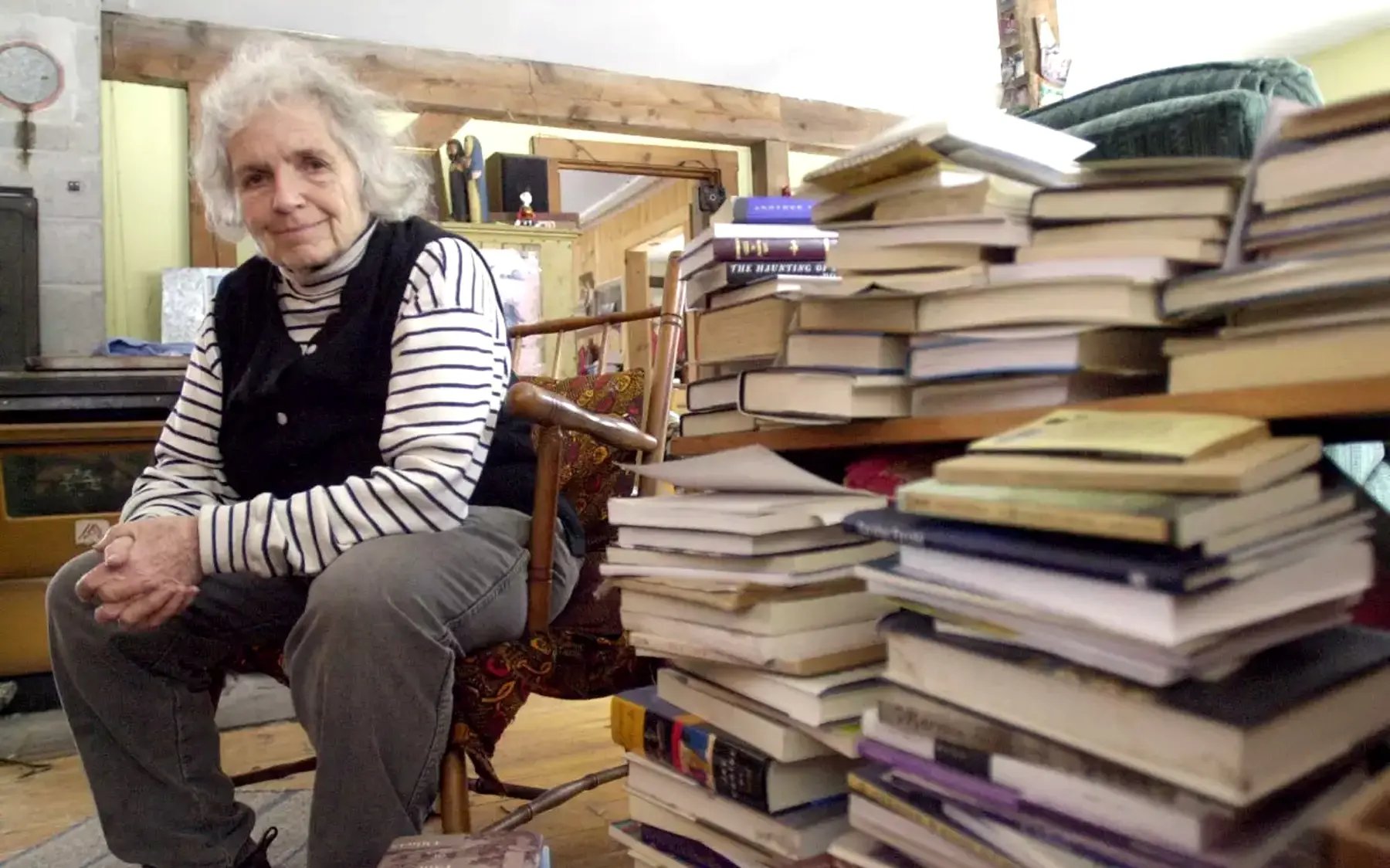
Known as “a writer’s writer,” Grace Paley built a reputation of writing short stories that emphasized craft. Yet, many aspects of her personal life wove their way into her work. Today, Paley is considered one of the greatest short story writers in American literature.
Grace Paley was a short story writer of Russian-American descent. Writing at the beginning of the 20th century, her work drew vivid portraits of the life around her neighborhood in the Bronx area of New York. Though her short story collections only numbered three, she is remembered as one of the greatest short story writers of American literature. Writing in America magazine, William Novak referred to Paley as “a writer’s writer” who “focuses her talent and energy on the craft itself.”
What is more remarkable about Paley is that she spent much of her writing years focusing on her two children to her first husband and her work as an activist.
As The Poetry Foundation is keen to point out, writing had only occasionally been Paley’s main occupation. She had spent a lot of time in playgrounds with her children and around other mothers. This mothering time fed into her stories, which are rich in the nuances of dialogue and thematic references to mothers, errant husbands and the ordinary lives of working-class New Yorkers.
Paley was also very active in both the feminist and peace movements. She travelled overseas as part of the anti-Vietnam protests. Nonetheless, she chose not to write about this work, other than in political pamphlets. She said:
“I think I could have done more for peace, if I’d written about the war, but I happen to love being in the streets.”
Writing about Paley in the New Yorker, Alexandra Schwartz referred to Paley as:
“First and foremost an antinuclear, antiwar, antiracist feminist activist who managed, in her spare time, to become one of the truly original voices of American fiction in the later twentieth century.”
The Life and Work of Grace Paley
Born Grace Goodside in 1922 to Russian-American immigrants, who had arrived in New York at the beginning of the 20th century. She was raised in the Bronx, an experience that would go on to heavily influence her writing. The young Grace’s parents spoke Russian and Yiddish at home. Like many children in her neighborhood, she grew up sandwiched between the two cultures.
Paley’s beginnings were humble, as was her education. She dropped out of high school at 16. Then she attended Hunter College for only a year before marriage. Her first husband was a film cameraman named Jesse Paley. Married at the age of nineteen in 1942, Grace and Jess had two children together, Nora and Danny. The couple later divorced.
Between 1942 and 1944, Jess served in the U.S. Army. This line of work meant that Grace lived in the army camps alongside many other wives of servicemen. It was during this time that she first became conscious of the ordinary lives of women and that they were of great importance. She also saw that they had been largely ignored in formal literature.
Paley began writing poetry, continuing after the end of the war when her two children were born. It was soon to short stories that she turned her attention. A key theme throughout Paley’s writing were the young mothers around her and their relationships with one another. She also wrote about their relationships with the men in their lives.
Paley’s first collection appeared in 1959 under the title, “The Little Disturbances of Man.” She claimed that the stories for this first collection were a result of “two small lucks.” The first being an illness she suffered that meant she couldn’t care for her children full-time. This holiday from mothering resulted in more time to write. The second stroke of luck was that an editor at Doubleday publishing house, who was an ex-husband of a friend, read three of her stories. He subsequently commissioned her to write some more.
Though it received critical acclaim, the initial sales were modest. She did, however, gain fans of her writing style, which was seen as ‘fresh and vigorous’ by The New Yorker. Some of Paley’s stories in the collection could be a little morose, but her voice portrays a lively and sometimes dark sense of humor in which to convey the everyday occurrences of city life. The collection opens with the story, “An Interest in Life,” which sees a woman who has been deserted by her husband and left to bring up her four children alone:
“My husband gave me a broom one Christmas. This wasn’t right. No one can tell me it was meant kindly.”
Paley’s stories hum with the dialects of her mid-20th century life in the Bronx. Her writing style is not plot-heavy but focused on character. She wrote with a fine ear for the Jewish, Black, Irish and Russian dialects that made up the rich tapestry of her neighborhood. The stories — some of which are more like fragments or vignettes — often lack an established structure. This style led to Paley’s work being considered Postmodern.
Paley also introduced a recurring character who went on to feature in her later stories. Faith Darwin starts out as a young mother raising her sons in New York. Throughout Paley’s story collections, we see Faith being let down in love and befriending the other young mothers in her neighborhood. Later Faith comes full circle as we see her as a middle-aged woman with grown sons. Paley portrays this journey best through her story, “The Long-Distance Runner.” We see a confused Faith running back through the streets of her life, trying to figure out her identity.
“One day, before or after forty-two, I became a long-distance runner.”
“The Long-Distance Runner” has been compared to Alan Sillitoe’s 1959 story, “The Loneliness of the Long-Distance Runner.” Both stories show the central protagonist trying to outrun their lives by taking up running as both an emotional and physical escape.
Many critics focused on Paley’s character of Faith, suggesting that she was an alter ego for Paley herself. Paley herself always denied this theory.
Following the relative success and reception of her first collection, Paley’s publishers encouraged her to write a novel. She gave this project a serious attempt, spending the next two years working on it. However, she gave it up, deciding instead to focus her writing time and energy on more short fiction.
Paley’s second collection eventually appeared in 1974, “Enormous Changes at the Last Minute.” In the interim, she had been heavily involved in both her mothering life and political activities.
Distributing antiwar pamphlets and marching on the Capitol, she had also travelled overseas to protest American involvement in Vietnam.
Her final standalone collection, “Later the Same Day,” appeared in 1985. A later full collection of all of Paley’s stories appeared in 1994. She also wrote a little poetry, publishing several collections. These poems tend more toward political themes, and have not been so critically well-received. Paley herself discredited her poetry as “too literary” for some.
She spent a brief time teaching at several New York universities, including Columbia, Syracuse and City College of New York, where she was writer-in-residence. She then for 22 years taught at Sarah Lawrence’s Bronx campus. Though Jess and Grace Paley separated in the 1950s, they remained married until 1972, when Grace remarried. Her second husband, Robert Nichols, was an architect, poet and short story writer. He was also a fellow anti-Vietnam War activist.
Despite her success as a short story writer, Paley continued to travel to countries such as Russia, El Salvador and Nicaragua to protest and assist in various campaigns. She was often arrested for civil disobedience. Even in her old age, she was considered dangerous, unstable and suspected as a communist by the FBI. They continued to hold a file open on her for over 30 years. In reality her family were mostly anti-communist socialists.
At just five feet tall and with her wild, white hair, Paley continued to fight for others until her death in 2007 at the age of eighty-four.
Books by Grace Paley
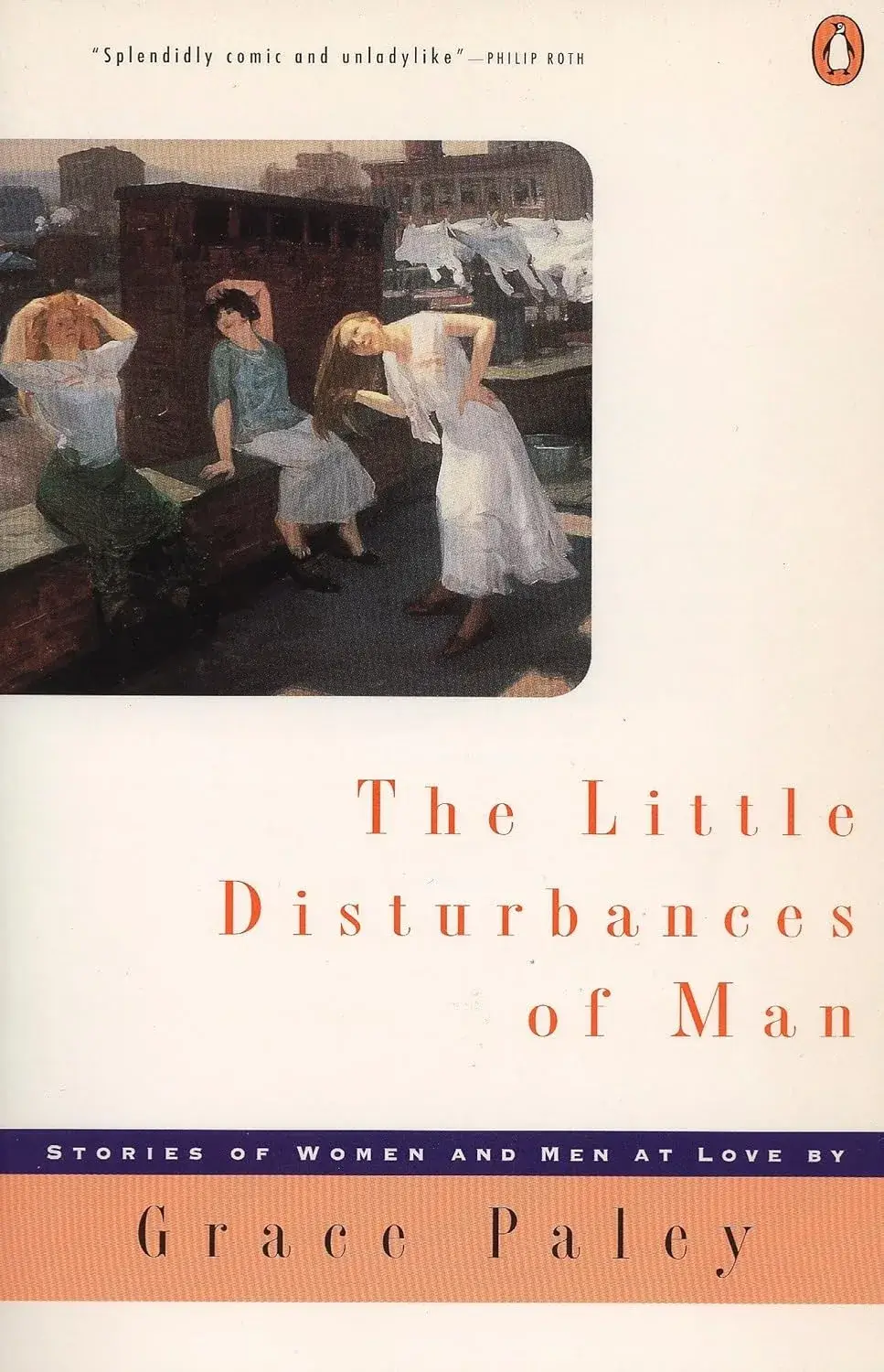
Ten stories fill the pages of this first collection, which focuses on the inhabitants of a busy New York neighborhood. The characters are the ordinary inhabitants on the street, dealing with the everyday “little disturbances” of life.
Though displaying Paley’s distinctively fresh and innovative voice, these first stories were more conventionally crafted than some of her later fiction.
Whilst LitHub describes Paley’s style within this first collection as both highly comic and deeply tragic, usually at the same time, some readers find the nonlinear or “slapdash” style difficult to follow at times.
Reviews
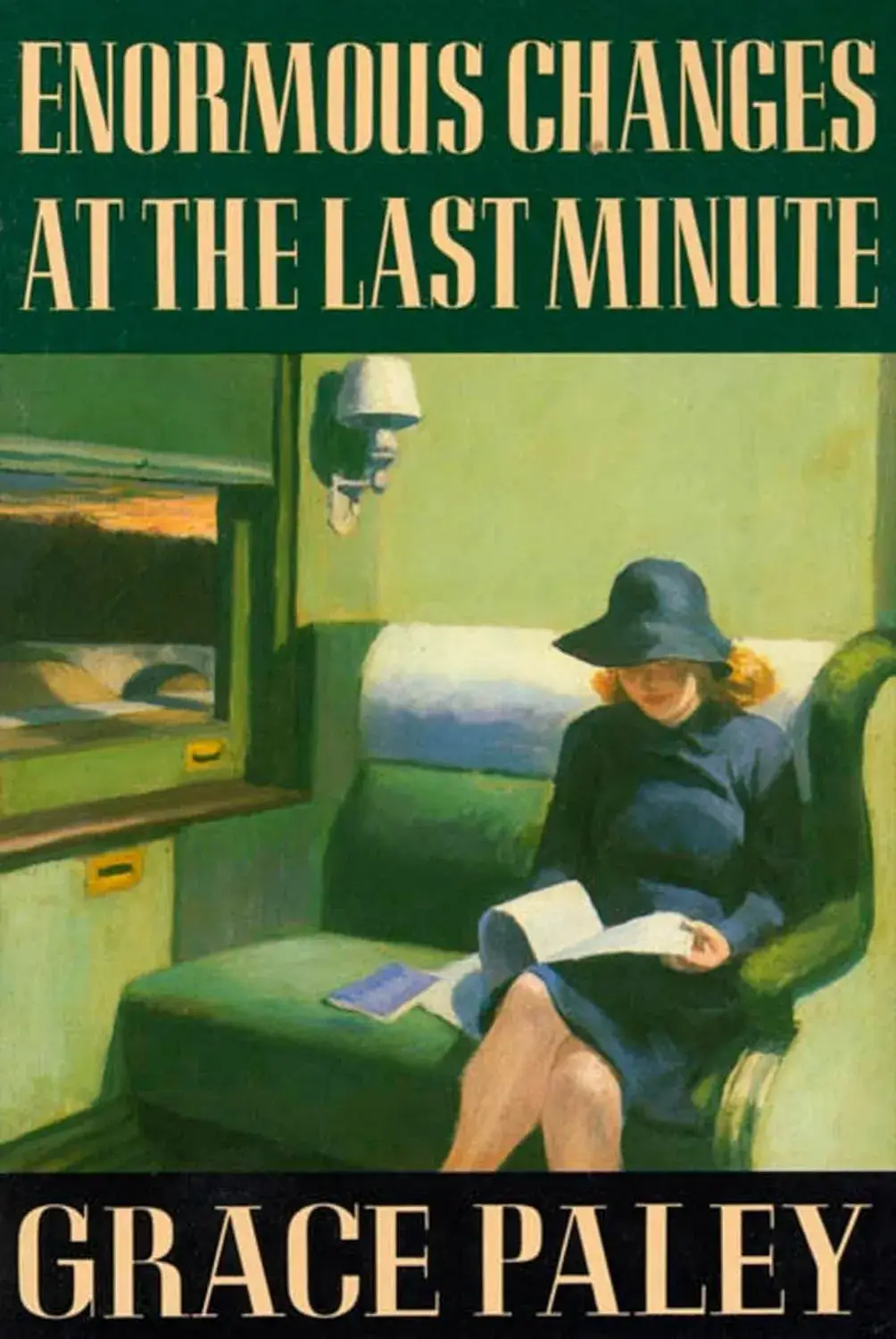
In Paley’s second collection, 11 of the 17 stories feature women without husbands. The emphasis is again on character over plot, perhaps even more so than her more conventionally crafted first collection.
Critic Lis Harris, in The New Yorker, wrote:
“I can’t think of another writer who captures the itch of the city, or the complexities of love between parents and children, or the cutting edge of sexual combat as well as Grace Paley does.” Some readers on Storygraph however found the stories a little difficult to follow.
Reviews
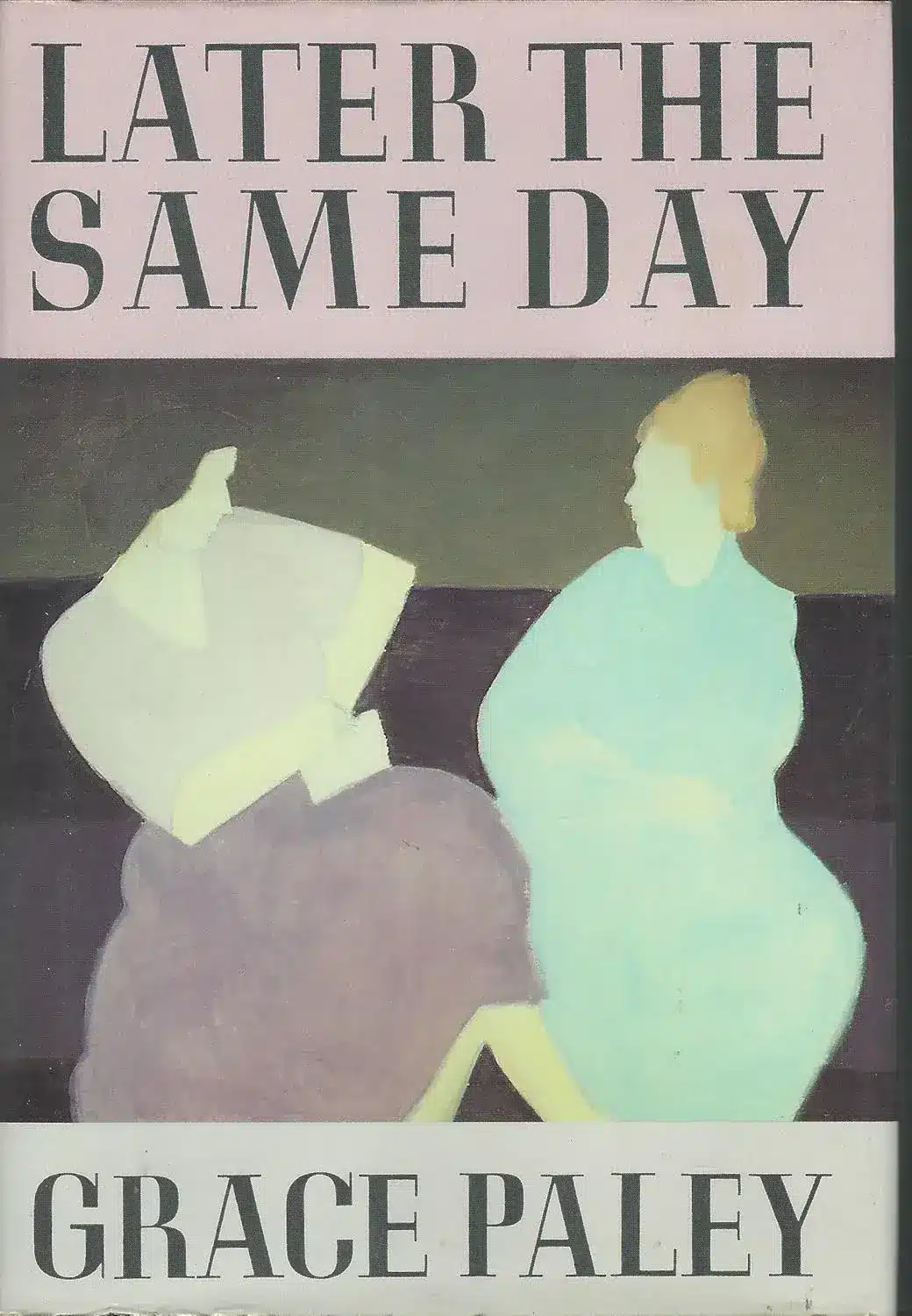
This third collection of seventeen stories continues her theme of compassionate and often comic explorations of ordinary people struggling with loneliness amidst the bustle of city life. The bulk of the stories in this collection feature the character of Faith Darwin, Paley’s suggested alter ego.
Reviews
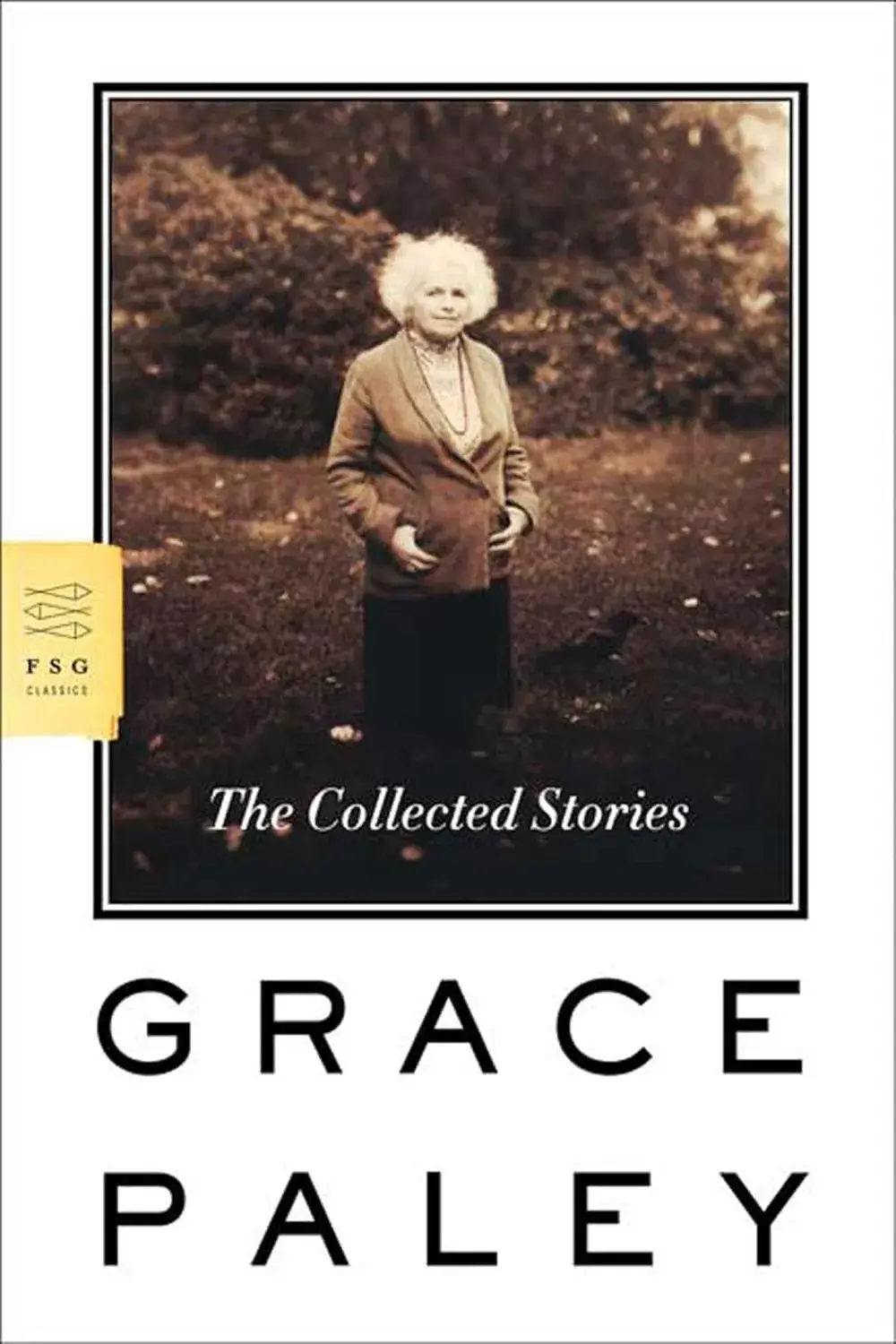
The collection brings together a full compendium of Paley’s short stories, collated from the three previous volumes.
Poetry and Nonfiction
Although less well-received, Grace Paley’s poetry, essays and talks have also been put together in various collections, including “Long Walks and Intimate Talks” in 1991 and “A Grace Paley Reader: Stories, Essays, and Poetry” in 2017.
Grace Paley: Politics and Activism
As previously stated, Paley was an activist for the majority of her life. In the “Grace Paley Reader: Stories, Essays, and Poetry,” editor Kevin Bowen and Paley’s daughter, Nora, set out her activist achievements, including leading her Greenwich Village PTA in protests against atomic testing, founding the Women Strike for Peace, picketing the draft board and traveling to North Vietnam to bring home U.S. prisoners of war.
Paley did not specifically align herself with any particular mainstream political candidates or parties, preferring to dedicate her energy to grassroots activism. Her involvement in political activism started modestly when she first became involved in the PTA at her children’s school.
Neighborhood concerns quite naturally led to wider global concerns for Paley. Becoming heavily involved in the 1960s Peace Movement, in particular, was significant. This dedication to peace led to Paley controversially traveling to some of the world’s most troubled nations, including North Vietnam, Nicaragua, Chile, El Salvador, the Soviet Union and Israel.
In 1988 she cofounded the Jewish Women’s Committee to end the occupation of the West Bank and Gaza. She was an outspoken advocate of Palestinian rights. Paley utilized her fiction to give voice to the diaspora as well as the issues facing women. In her story “The Used-Boy Raisers,” written during the 1950s, Paley’s central character Faith Darwin reflects on her two husbands and Jewish concerns. Faith denies the significance of the Kaddish (the mourner’s prayer) and goes on to reject Israel “on technical grounds.”
Although Paley’s characters often reflect on Jewish concerns, she did not associate them or herself with specific religious observance. Instead, her Jewish characters are modern, liberal figures, largely assimilated within American communities. Paley did assert that she was “never a Zionist,” disassociating herself from the state of Israel as with her character of Faith.
Paley attended the Stalinist-sponsored World Peace Congress in Moscow in 1974. There she denounced the USSR for their silencing of political dissidents. The congress dissociated itself from her statement.
Paley stated in an interview on The Progessive Magazine that she frequently argued with her parents around their socialist leanings. She reported that they were very anti-communist. They aligned themselves as social democrats. Paley was a member of her politically inspired student unions, which she declared were not directly aligned with the communist party but were heavily influenced by it. Her parents did not approve of her involvement. In later life, however, she felt that they had been right about a lot of things and had come to see that they had been right to be anti-communist.
Awards
Paley was the winner of many awards and accolades, including an O. Henry Award in 1969 for her story “Distance.” She was also awarded a Guggenheim Fellowship for fiction in 1961.
Her “Collected Stories” were nominated for the 1995 Pulitzer Prize and the 1994 National Book Award. Paley was admitted to the Academy of Arts and Letters in 1980.
Grace Paley on Screen
In 1985, a three-part film entitled “Enormous Changes at the Last Minute” based on the stories of Paley was released. The film was directed by Mirra Bank, Ellen Hovde and Muffie Meyer. The New York Times found the film to be hazy and sentimental.
Grace Paley: Collected Shorts
“Grace Paley: Collected Shorts” was released in 2010 by director Lilly Rivlin, exploring and celebrating the life of Paley herself. It was referenced as an “intimate documentary” by the Jewish Film Institute.
Grace Paley: Notable Quotes of the Author
Interviewed in The Paris Review on her dismissal of plot, Paley stated:
“Plot is nothing; plot is simply time, a timeline. All our stories have timelines. One thing happens, then another thing happens.”
“I needed to speak in some inventive way about our female and male lives in those years…I was a woman writing at the early moment when small drops of worried resentment and noble rage were secretly, slowly building in the second wave of the Women’s Movement.”
When questioned on the fifteen years between her first and second short story collections on the publication of “Enormous Changes at the Last Minute,” Paley seemed to defend herself when she said she wrote short stories because “art is too long and life is too short.”
Though Paley was a lifelong activist, she was sometimes questioned on her decision not to write more about politics. Her response:
“People will sometimes say, ‘Why don’t you write more politics?’ And I have to explain to them that writing the lives of women IS politics.”
Authors Like Grace Paley
- Tillie Olsen
- Lucia Berlin
- Lorrie Moore
- Laurie Colwin
- Francine Prose

Get recommendations on hidden gems from emerging authors, as well as lesser-known titles from literary legends.