TLDR
Anxiety can look a little different for everyone, which is why how the mental health condition is portrayed in books and film is crucial. These stories feature some of the best examples of characters with anxiety who can help anxious readers feel understood.
Anxiety is a common mental health condition, one that we regularly see portrayed in our favorite books and films. From Esther Greenwood to Charlie Spring, classic literature and modern media are full of characters with anxiety.
Anxious characters come in many different forms. Some characters are diagnosed with anxiety, and their mental health journey makes up a large part of the reading experience. Others demonstrate the symptoms and traits that we associate with anxiety, without an official diagnosis.
One trend is clear: Anxiety is cropping up more and more in books, films and TV shows. And that’s a good thing.
Fictional characters with anxiety are showing real people that it’s OK to struggle. Anxiety doesn’t make you strange or abnormal, but human. These characters are truly relatable. They’re full of the resilience and strength it takes to handle conditions like anxiety every single day.
Let’s take a closer look at nine characters with anxiety disorders. We’ve included book and film characters from across the ages to showcase the diverse range of characters who struggle with their mental health. Their vulnerability might just be their superpower!
Trigger Warning: suicide and related subjects
9 Characters With Anxiety in Books and Movies
1. Charlie Spring – ‘Heartstopper’ by Alice Oseman
Charlie Spring first appeared in Alice Oseman’s graphic novel, “Heartstopper,” later featuring in “This Winter,” “Nick and Charlie,” “Solitaire” and “Radio Silence.” Charlie is a self-conscious and sensitive teenager, struggling with self-harm, anxiety, depression, anorexia and obsessive compulsive disorder (OCD).
Charlie undergoes a healing journey throughout the “Heartstopper” series, but the novels aren’t just about his mental health. They represent Charlie as a realistic and three-dimensional character — and they follow his story as he comes to terms with his sexual identity.
In 2022 Alice Oseman’s novels were adapted into a hit Netflix series, with Joe Locke cast in the role of Charlie. The TV series covered Charlie’s experiences with anxiety and related mental health conditions, including his brief stay in hospital.
Many have praised “Heartstopper” for portraying mental health so openly. The struggles of Charlie and his friends represent those experienced by many real young people. The books and Netflix series have also encouraged greater representation of LGBTQIA+ relationships in literature and on screen.
2. Susanna Kaysen – ‘Girl, Interrupted’
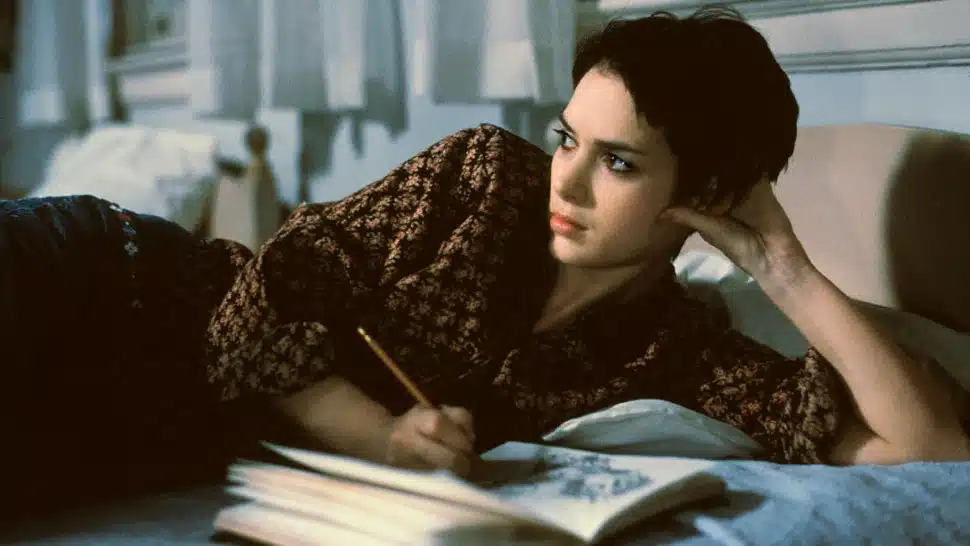
Based on her own experiences in a mental hospital during the 1960s, Susanna Kaysen’s “Girl, Interrupted” follows the story of young Susanna, who is admitted to a mental health facility, although she struggles to understand why.
Although Susanna is diagnosed with borderline personality disorder (BPD), rather than generalized anxiety disorder (GAD), she experiences intense nervousness and frequently expresses anxiety about events from her past.
Susanna shines a light on mental health treatment in the 1960s, before conditions like BPD and anxiety were properly understood. Treatment included a lot of drugs, with attitudes toward women influencing how Susanna is viewed in the hospital. She and her fellow patients discuss the unfair double standards in society and the labels they have all been given.
There’s also a popular 1999 film version of Susanna Kaysen’s novel, featuring Winona Ryder as Susanna. It accurately portrays Susanna’s feelings of stress, anxiety and depression as she struggles to understand the inner workings of her mind.
Editor’s Note: Read our full profile of author Susanna Kaysen and our full review of “Girl, Interrupted.”
3. Aza Holmes – ‘Turtles All the Way Down’ by John Green

“Turtles All the Way Down” is a popular young adult read. It follows Aza Holmes, a teenager who suffers from anxiety and OCD. She takes extreme steps to avoid germs, constantly worrying about things that other people don’t seem to struggle with.
John Green has spoken about his own experiences with anxiety and OCD, which is why he chooses to feature fictional characters with anxiety in his books. He raises awareness for mental health conditions like anxiety, particularly among young readers.
Aza Holmes represents anxiety in a very personal way. She shows just how debilitating it can be for real people every single day. Aza frequently experiences spiralling thoughts, feeling as though she can’t escape her own mind. This journey is very relatable for those who struggle with anxiety or overthinking.
Young online readers have praised the novel for its honest and realistic representation of life with anxiety and OCD. Morgan Ome’s article for the John Hopkins Newsletter discusses how she feels seen by John Green’s character.
4. Esther Greenwood – ‘The Bell Jar’ by Sylvia Plath
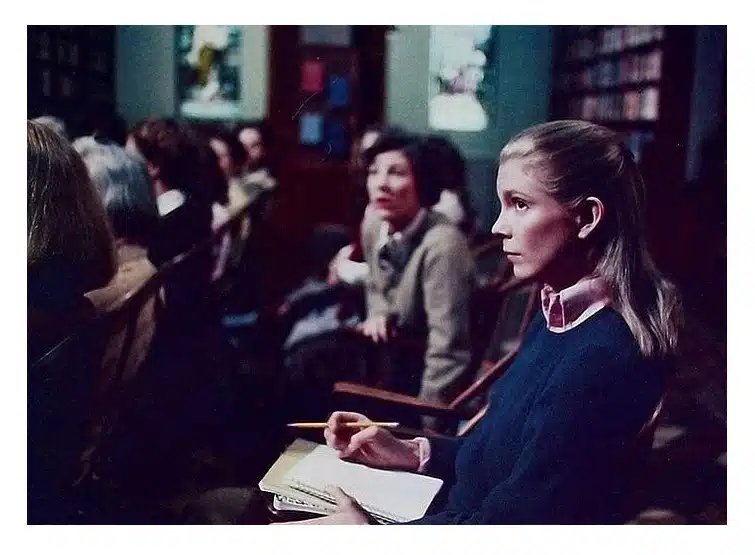
Similar to “Girl, Interrupted,” Sylvia Plath’s novel is a fictionalized account of the author’s experiences in McLean Hospital, the same place where Susanna Kaysen was later treated.
The novel’s protagonist, Esther, struggles with depression and obsessive thinking. Many of her anxieties stem from societal pressure. She struggles to come to terms with her future, wanting to pursue a career in writing, but feeling pressure to start thinking about marriage and children.
She becomes hyper-fixated on the idea of becoming a mother, engaging in obsessive, irrational behavior. Eventually, she attempts to end her own life, triggering the entry to a mental health facility.
Although Esther’s mental health journey makes up a large part of the novel, it is also about her life as a young woman in America. It is a poignant coming-of-age tale, following Esther’s experiences working, dating and learning to understand herself.
“The Bell Jar” is a witty and fascinating insight into Sylvia Plath’s own mental health struggles. The author uses the character of Esther to make shrewd observations about the position of women in 1950s America.
Editor’s Note: Read our full profile of Sylvia Plath and full review of “The Bell Jar.”
5. Anna Fox – ‘The Woman in the Window’ by A. J. Finn
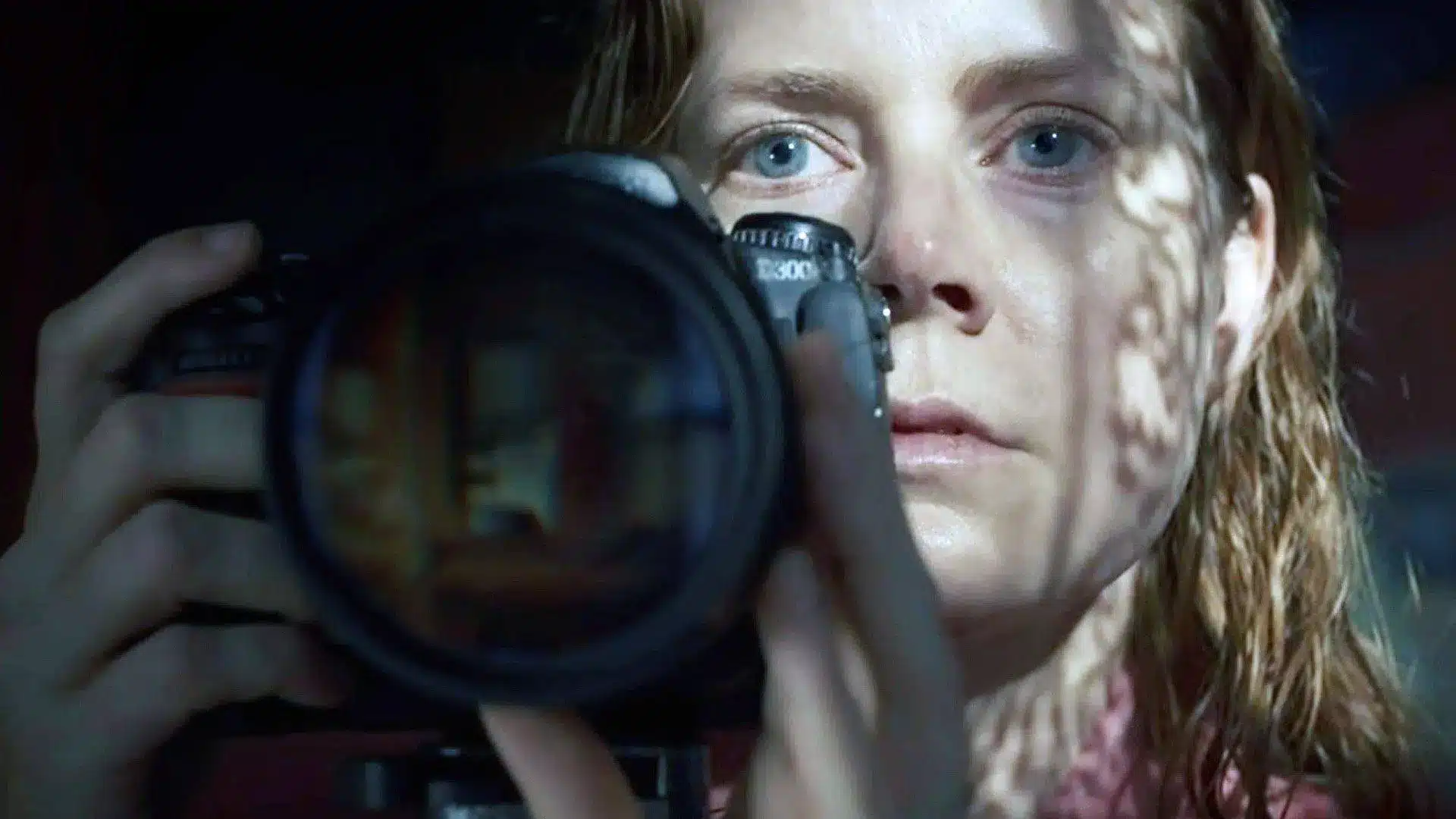
Published in 2018, “The Woman in the Window” is a thriller about Dr. Anna Fox, a former child psychologist who struggles with agoraphobia, anxiety and post-traumatic stress disorder (PTSD).
Living a quiet and reclusive life in New York, she one day witnesses a murder across the street. However, Anna is an unreliable narrator, and she begins to unravel as she is forced to question everything she believed to be real.
Although “The Woman in the Window” is not just about Anna’s mental health journey, it is her condition that influences her actions and makes up a large part of her story.
A Netflix adaptation of the novel was released in May 2021, starring Amy Adams in the role of Anna. However, parts of the film have been criticized for their representation of mental health.
6. Arthur Fleck – ‘Joker’

Better known as the Joker, Arthur Fleck is no ordinary villain. In Todd Phillips’ 2019 film “Joker,” Joaquin Phoenix portrays Arthur as a complicated man dealing with his own mental health battle, before he becomes the well-known supervillain.
This specific backstory is unique to “Joker,” although elements of the story have appeared in other iterations of the “Batman” comics and films.
After significant physical and mental abuse, Arthur develops multiple mental health conditions, such as chronic depression. He struggles with pseudobulbar affect (PBA), which leads to sudden episodes of laughing or crying, typically at inappropriate times, such as laughing at a death. This stems from his intense neurotic anxiety and childhood trauma.
Although the Joker is an evil character, “Joker” introduced an interesting insight into Arthur’s mindset. It added real depth to his character, showing another side to one of the most famous villains in fiction.
Editorial Note: There is an official script book version of “The Joker” available for purchase on Amazon.
7. Chester Owens – ‘The Last of the Mentally Ill’ by Joseph Rauch
Chester Owens features in Joseph Rauch’s 2022 novel, “The Last of the Mentally Ill.” Chester is a severely socially anxious teenager living in a near-future New York.
He lives in a secretive, locked-down facility called Greendale, along with a group of other young people, all of whom struggle with mental illnesses. There they are taught how to deal with their conditions, but Chester begins to suspect that all is not as it seems.
Chester is diagnosed with social anxiety disorder and generalized anxiety disorder. He takes a serotonin and norepinephrine reuptake inhibitor (SNRI) for his anxiety, and he goes to therapy. By the end of the novel, Chester has learned how to better cope with his anxiety disorders.
“The Last of the Mentally Ill” is a powerful, complex and uplifting thriller that considers the place mental illness holds in our society. Chester’s anxiety is central to his story.
Readers have praised the novel for its flawed yet relatable characters and realistic portrayal of mental illness. Chester’s anxiety isn’t a “quirk” but a very real mental health condition that affects his life every day.
8. Charlie Kelmeckis – ‘The Perks of Being a Wallflower’ by Stephen Chbosky
Charlie Kelmeckis features in Stephen Chbosky’s 1999 novel “The Perks of Being a Wallflower.” Charlie is an awkward and lonely teenager, dealing with the recent death of a close friend, as well as the death of his aunt, who passed away when he was a child.
The novel is about Charlie processing his trauma. As more elements of his childhood and early adolescence come to light, the reader can see that Charlie needs to process his feelings and find healthy ways to cope with his mental health.
He experiences anxiety and depression throughout the novel. We see him deal with panic attacks, dissociation and suicidal thoughts, including flashbacks to previous events in his life.
“The Perks of Being a Wallflower” was adapted into a film in 2012, directed by the author himself. It stars Logan Lerman in the role of Charlie, offering a realistic and respectful representation of mental health for both Charlie and his circle of friends.
9. Eleanor Oliphant – ‘Eleanor Oliphant is Completely Fine’ by Gail Honeyman
Eleanor Oliphant is a charmingly intriguing protagonist. Despite her assertions that she is “completely fine,” the reader can see that Eleanor’s life isn’t all that it seems. She deals with trauma, depression, anxiety, suicidal thoughts and possible OCD throughout the book.
Eleanor displays traits that might be described as anxious or obsessive, such as believing her soulmate is a man she’s never actually met. However, she never acknowledges these struggles, so the reader must view everything through her unique and logical perspective.
Eleanor is a fascinating character. She is funny, frank and very real, so you can’t help but feel for her as she experiences the ups and downs of life. It’s particularly interesting to read a book where the main character experiences mental illness, but she is unaware that anything is wrong.
Editorial Note: Read our full review of “Eleanor Oliphant is Completely Fine” here.
Book and Film Characters With Anxiety: Key Takeaways
All of these fictional characters encourage greater representation of mental health disorders in books, TV shows and films. They portray anxious characters as real and relatable people, showing that anxiety should never be something to be ashamed of.
Although the representation of anxiety will differ by era, genre and author – with some novels portraying anxious characters in a more problematic light than others – these characters represent the full spectrum of human personality, emotion and experience.
They humanize characters with mental health conditions, normalizing important conversations around mental illness. More than anything else, they allow those with anxiety to really feel seen.

Get recommendations on hidden gems from emerging authors, as well as lesser-known titles from literary legends.