


TLDR
From Taylor Swift to The Police, musicians have drawn inspiration from classic literature to write songs. The nine songs listed here are some of the most popular songs inspired by books, yet many may still come as a surprise. References to books are sometimes written in the song’s title while others are hidden deep within the lyrics.
Good songwriters are poets. They’re masters of literature, using beautiful imagery, lyricism and narrative storytelling to express emotion.
Throughout the years, we’ve seen many songwriters, musicians and composers use books as their inspiration. They’ve used classic tales and modern novels to create new forms of art for fans across the world.
They’ve shown their deference to famous novelists and even promoted old books to new readers, who might not otherwise have known those books existed.
From Kate Bush’s “Wuthering Heights,” which brought Emily Brontë to a whole new generation of readers, to Taylor Swift’s library of literary references, the world of music has a lot to offer.
9 Songs Inspired by Books: A Literary Playlist For Book Lovers
The songs on this list are full of literary references, evocative imagery and thematic explorations. They make the perfect background music for your reading session, helping you appreciate the written word in all its forms.
Add these tracks to Spotify for a ready-made literary playlist!
1. ‘Wuthering Heights’ by Kate Bush (1978)

In 1978, Kate Bush released her debut track, “Wuthering Heights.” The song spent four weeks at number one on the UK singles chart, making Bush the first female artist to reach number one with a fully self-written song.
“Wuthering Heights” was inspired by Emily Brontë’s 1847 novel by the same name. Like the book, Bush uses the dark Yorkshire Moors as her setting, starting her song with, “Out on the wily, windy moors / We’d roll and fall in green.”
In her song, Bush perfectly evokes the sense of longing and despair in the original novel. “How could you leave me / When I needed to possess you? / I hated you, I loved you, too.” She uses the dark and twisted love between Cathy and Heathcliff to bring her song to life.
Bush’s song is almost an ode to the original text. She tells the same story, even mimicking Lockwood’s dream at Wuthering Heights, in which he sees Cathy at the window. Heathcliff rushes to open the window and let her in.
Editorial Note: Read our full review of the “Wuthering Heights” novel here. Image Credit to NME.
2. ‘Tea in the Sahara’ by The Police (1983)
The Police’s 1983 track, “Tea in the Sahara,” is inspired by Paul Bowles’ novel “The Sheltering Sky.” In the book, the character Port hears a tale about three sisters who have tea with a prince in the Sahara Desert. He leaves and promises to come back, but he never does.
Sting loved the book so much that he decided to write a song inspired by it. In 1995, the songwriter said, “It’s one of the most beautiful, sustained, poetic novels I’ve ever read. It’s about Americans that regard themselves as travellers and not tourists, and I class myself in that category. I’m a hopeless tourist, but I’m constantly on the move.”
In 1993, guitarist Andy Summers remarked, “I think it was me who gave Sting that book. Live we began extending the song, opened it up. I really loved playing it with all the echoplex stuff I did. I did it with my band on the XYZ tour so I could show off my fancy guitar part.”
In their song, The Police cover the same themes as Bowles’ original story. The song is about yearning for something that is ultimately unattainable. It’s about fulfilling dreams, breaking promises and reflecting on what is lost.
“The sky turned to black / Would he ever come back? They would climb a high dune / They would pray to the moon / But he’d never return / So the sisters would burn.”
Editorial Note: Image Credit to Flickr
3. ‘Ramble On’ by Led Zeppelin (1969)
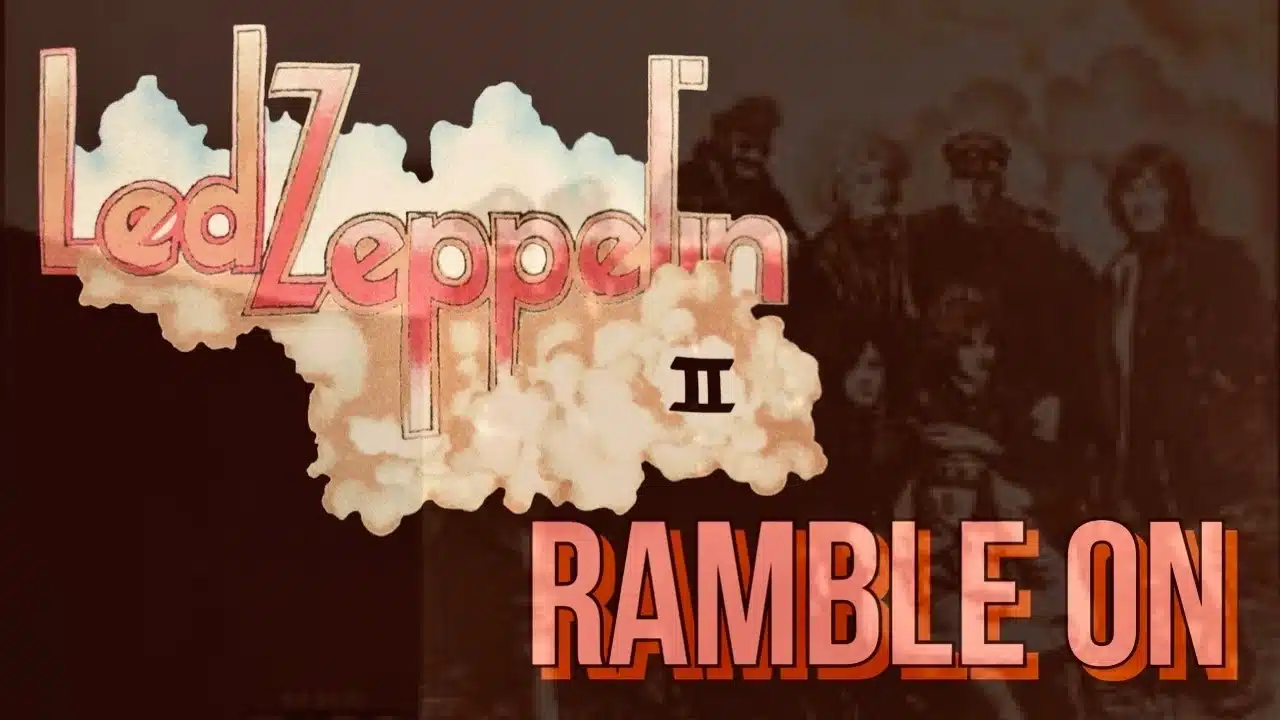
Led Zeppelin’s lead singer, Robert Plant, is a huge fan of J. R. R. Tolkien, including “The Lord of the Rings.” Written by Plant, “Ramble On” blends rock and folk influences to create a unique sound still beloved today.
The lyrics include multiple references to Tolkien’s literary world, such as Mordor and Gollum. “Twas in the darkest depths of Mordor / I met a girl so fair / But Gollum and the Evil One / Crept up and slipped away with her.”
“Ramble On” is a clear homage to Tolkien’s novels. The song has an adventurous, mythic and folksy feel. It leans into Plant’s powers of creative storytelling and evokes the narrative beauty of Tolkien’s work.
In a 2025 interview with late-night host Stephen Colbert, Plant and Colbert geeked out over Tolkien. They were so busy chatting about their love of Tolkien that they seemed to forget all about promoting Plant’s new album, a fact many loyal music and book nerds appreciated!
“Ramble On” isn’t the only Led Zeppelin song inspired by J. R. R. Tolkien’s books. Their songs “Over the Hills and Far Away,” “Misty Mountain Hop” and “The Battle of Evermore” are also inspired by the author.
Editorial Note: Image Credit to Spotify
4. ‘Fable’ by Gatsby’s American Dream (2005)
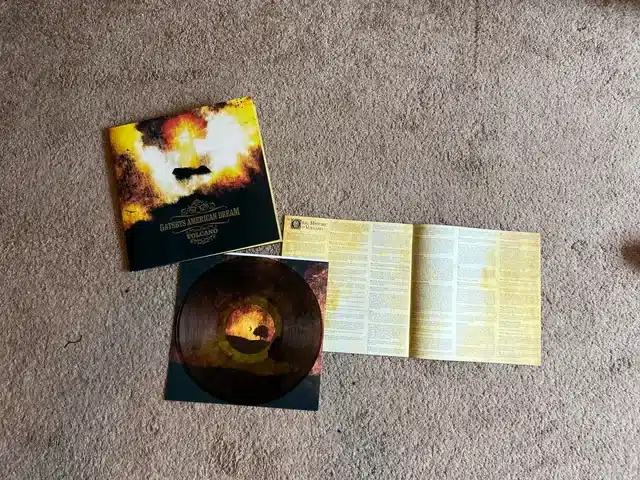
Gatsby’s American Dream’s song, “Fable,” tells the story of boys stuck on an island. Based on William Golding’s “Lord of the Flies,” the song conveys the same hopelessness, sadness and violence as the original text.
In Golding’s novel, the lost boys become increasingly savage, losing all sense of social norms or civilization. Both the book and the song express the same loss of innocence. They consider themes like home and dehumanization.
“We landed in this place / Tried to make this island more like home / But there are some things, better left behind / We came here on a plane, just a bunch of little boys.”
Repeated lines like, “Kill the pig pig! Kill the pig pig!” refer to Golding’s character, Piggy, who is brutally murdered by the other boys.
The band’s name is also a nod to F. Scott Fitzgerald’s “The Great Gatsby” and the fickle American Dream that its title character desperately tries to reach.
Editorial Note: Image Credit to Reddit
5. ‘tolerate it’ by Taylor Swift (2020)
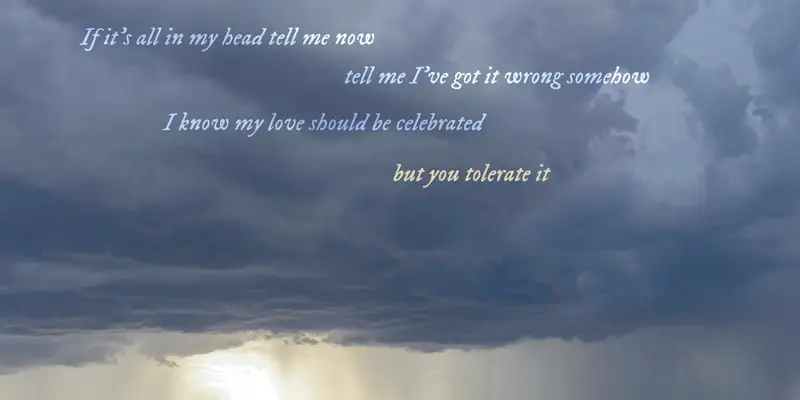
Taylor Swift is known for her explorations of literature, history and culture. She regularly makes references to famous works, including her songs “The Fate of Ophelia” and “Love Story,” which are inspired by Shakespeare’s “Hamlet” and “Romeo and Juliet” respectively.
“tolerate it” is perhaps one of her lesser-known literary tunes. Inspired by Daphne du Maurier’s “Rebecca,” Swift’s song tells the story of a quiet lover, watching and waiting, feeling like her partner is ambivalent toward her.
“You’re so much older and wiser and I / I wait by the door like I’m just a kid / Use my best colors for your portrait.” At the start of “Rebecca,” the unnamed narrator watches the older Max de Winter, sketching him and falling in love with him from a distance. When he eventually asks her to marry him, he uses the line, “I’m asking you to marry me, you little fool.”
Once married, the new Mrs de Winter feels young and childish, overshadowed by Max’s late wife, Rebecca. In a 2020 interview, Taylor Swift confirmed that she wrote the song after reading “Rebecca.” The track is a gentle homage to the unnamed narrator’s struggles to find her place in Max’s life.
Editorial Note: Image Credit to Business Insider
6. ‘White Rabbit’ by Jefferson Airplane (1967)
Jefferson Airplane’s “White Rabbit” is inspired by Lewis Caroll’s “Alice in Wonderland” and “Through the Looking Glass.” It alludes to the hallucinogenic, illusory nature of Caroll’s stories.
The band’s iconic call of “feed your head” refers to how ‘60s artists like Jefferson Airplane would use drugs to expand their minds and senses. It calls for listeners to follow their curiosity. “One pill makes you larger / And one pill makes you small / And the ones that mother gives you / Don’t do anything at all.”
Written by singer Grace Slick, who joined the band in 1966, the song evokes the feeling you might get when reading “Alice in Wonderland.” The book is a bizarre series of events, none of which seem to make much sense.
The singer wrote “White Rabbit” after an acid trip. Slick was a big part of the psychedelic music scene during the 1960s. In fact, “Alice in Wonderland” became an accidental counterculture work during this time. The 1951 Disney film version of Caroll’s story was even screened at “trip festivals.”
Editorial Note: Read our profile of Ken Kesey – author and icon of the 1960s psychedelic counterculture movement.
7. ‘1984’ by David Bowie (1974)
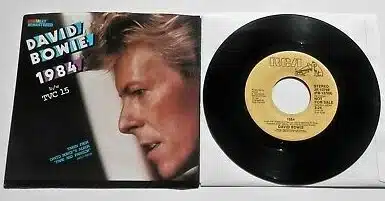
David Bowie’s “1984” was released in 1974 as part of Bowie’s album “Diamond Dogs.” The song takes its inspiration from George Orwell’s novel of the same name. The novel is a dystopian tale about the dangers of Totalitarianism. It follows the story of Winston Smith as he defies the system.
The track was originally intended for a stage musical based on “1984,” but Bowie was denied permission to continue the project. The song focuses on Winston during his imprisonment and interrogation, with haunting lyrics that warn against a loss of personal freedom.
“They’ll split your pretty cranium and fill it full of air / And tell that you’re 80, but brother, you won’t care / You’ll be shooting up on anything, tomorrow’s never there / Beware the savage lure / Of 1984.”
David Bowie had a lifelong obsession with Orwell’s dystopian world. His tracks “Big Brother” and “1984” explore his fascination with themes like authoritarianism, fear and rebellion.
Editorial Note: Image Credit to Gripsweat
8. ‘Killing an Arab’ by The Cure (1980)
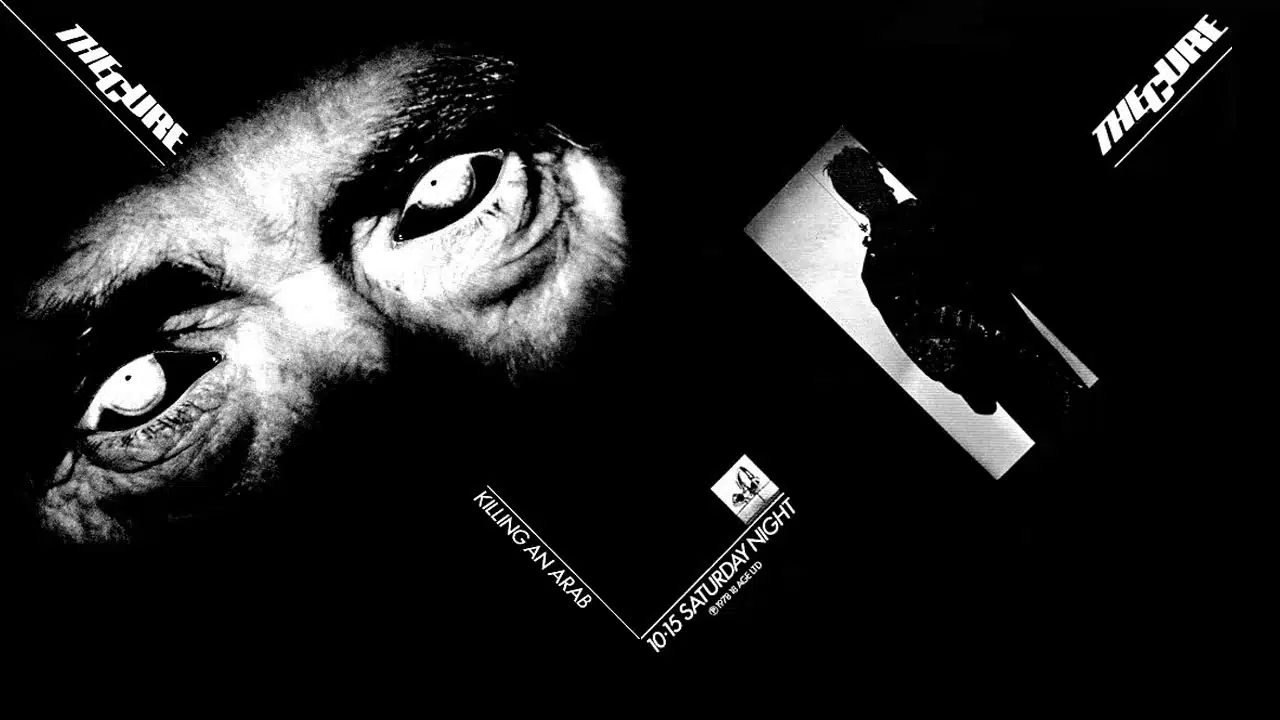
“Killing an Arab” was the debut single for English band The Cure. The song is a direct reference to Albert Camus’ 1942 novel, “The Stranger” (“L’Étranger” in French). In the novel, the protagonist, Meursault, murders an Arab for no apparent reason and feels no remorse. The book is a philosophical comment on the absurdist nature of existence.
The song references the novel’s plot, prompting the same sense of immediacy and simplicity. “I’m alive / I’m dead / I’m the stranger / Killing an Arab.” This reflects the book’s matter-of-fact tone as it follows Meursault’s emotionless behavior.
The lyrics, “I can turn and walk away, or I can fire the gun / Staring at the sky, staring at the sun / Whichever I choose, it amounts to the same / Absolutely nothing,” perfectly capture Camus’ absurdist take on the world.
Singer-songwriter Robert Smith said the song was “a short poetic attempt at condensing my impression of the key moments in L’Étranger.”
Editor’s note: Check out our list of the best novellas for a deeper insight into Albert Camus’ seminal text.
9. ‘Narcissist’ by The Libertines (2004)
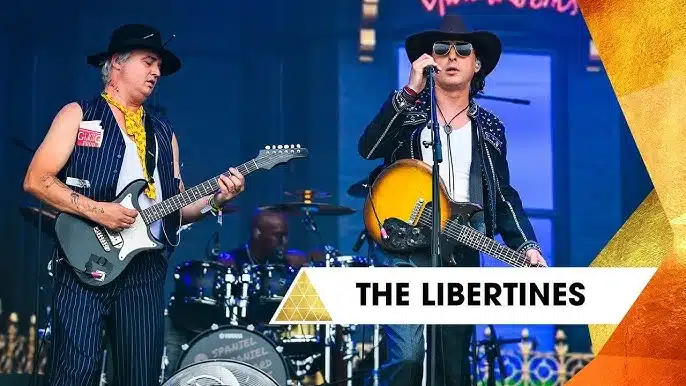
“Narcissist” was released in 2004 as part of the band’s second album, “The Libertines.” Based on Oscar Wilde’s 1890 novel, “The Picture of Dorian Gray,” the song explores vanity, eternal youth and superficiality.
Wilde’s original text has become an iconic tale of beauty, corruption and the dangers of immorality. The song namechecks the character Dorian Gray in its lyrics. “They’re just narcissists / Well wouldn’t it be nice to be Dorian Gray? / Just for a day.”
Similar to the book, the song plays on the idea of eternal youth. In Wilde’s novel, Dorian creeps closer to evil while his portrait bears the marks of his immorality and age. His actions catch up to him eventually, and he attempts to destroy his portrait, which has come to represent his ugly and corrupted soul.
“Narcissist” conveys a similar message that beauty and youth won’t last forever. “We’re living in a looking glass / As the beauty of life goes by / You’re going to be so old / You’re going to grow so old / Your skin so cold / Well they’re just narcissists.”

Get recommendations on hidden gems from emerging authors, as well as lesser-known titles from literary legends.




Fabulous article, Eleanor. Didn’t know the story behind “Killing an Arab” or “tolerate it”.
This is a great write up and made me think about where artists get their inspiration from. I really enjoyed how the author of this took music from across different times too.