
As an Amazon Associate, we earn from qualifying purchases.
TLDR
“The Correspondent” by Virginia Evans follows a series of letters written by a handful of characters, with 73-year-old Sybil Van Antwerp at the center. Readers must distinguish truth from what’s being hidden. The novel deals with aging, love, grief and the search for belonging.
“The Correspondent” is an immersive look into a life full of grief, love, growth and the search for belonging. Author Virginia Evans presents readers with the letters that make up Sybil Van Antwerp, a 73-year-old woman from Maryland who has made it her life’s work to write.
In this novel, as it is in life, the reader must sift through the letters, asking themselves whose side of the story is true, what is being hidden, and how (if at all) a person can move on. Each thread of this complex story is intertwined. Sybil’s declining eyesight, strained familial relationships, grief and, most notably, pervasive regret that has snowballed to last a lifetime.
While being a work of fiction, this novel, spanning 20 years, feels like a complete view of very real people’s lives. Sybil, the anchoring character, drives the narration with her wit, brutal honesty and love for order. Other characters come in like the tide, leaving marks on Sybil’s life even if they only exist in her orbit for a minute. This bundle of letters turned novel is thought-provoking and deeply necessary.
The Correspondent Summary: A Cage of Your Own Making is Still a Cage
“The Correspondent” is told completely through letters and emails, with the first page of brief expository narrative the only exception. The plot and character details are revealed bit by bit through the letters.
When the novel opens, Sybil is 73 years old, and the first letter we see her pen is to her brother, Felix. She is a sister, a mother to three children, an ex wife, a retired clerk for the renowned Judge Donnelly, and a profound lover of books. If there was ever an assumption that these titles would lend to a feeling of fulfillment, that assumption would be incorrect.
Sybil lost her son, Gilbert, when he was 8 years old. Walling herself with grief and regret, Sybil barreled through her work and distanced herself from her family.
After digging herself a large hole, Sybil must find a way to come back as she realizes that maybe connection is the rope she’s been looking for all along.
At The Rauch Review, we care deeply about being transparent and earning your trust. These articles explain why and how we created our unique methodology for reviewing books and other storytelling mediums.
Audience and Genre: Epistolary, Literary Fiction for Lovers of Life
At first glance, the audience could be seen as those who have lived a lot of life. The true demographic, however, is those who think deeply about life and all its special complexities. This book spans many groups of people to find a warmly universal quality.
The genre falls more specifically into epistolary fiction and literary fiction, although it possesses elements of psychological fiction as well. The presentation of the story through letters and the surprising characters introduced along the way keep the story from falling into predictable tropes and stereotypes.
Perspective: Revolving First Person
This novel uses first person perspective through letters and occasionally emails to tell the story. The point of view shifts with every correspondent, sometimes flipping between two characters, but more frequently jumping between many.
The characters who write the most letters are:
- Sybil
- Rosalie
- Felix
- Harry
- Theodore
Each letter lasts around one to three pages. The only character who will pen letters back to back is Sybil. While there are the main letter writers, other characters come in for short periods of time to write letters to Sybil. The sporadic letters are almost always in response to Sybil reaching out first.
The shifts in point of view can be detected by the greeting at the beginning of the letter, or the salutation at the end. Beyond the markers of sender and recipient on the messages, each character has their own distinct voice and cadence that can be detected after briefly knowing the characters.
As the correspondents come in, they feel true to life. The jumps in story between letters allow the reader to feel like they are experiencing life along with Sybil, rather than reading the novel they picked up.
Three Cs: Compelling, Clear, Concise
Editorial Note: We believe these three factors are important for evaluating general writing quality across every aspect of the book. Before you get into further analysis, here’s a quick breakdown to clarify how we’re using these words:
- Compelling: Does the author consistently write in a way that would make most readers emotionally invested in the book’s content?
- Clear: Are most sentences and parts of the book easy enough to read and understand?
- Concise: Are there sections or many sentences that could be cut? Does the book have pacing problems?
Compelling: Sometimes Writing is Easier
Virginia Evans crafts Sybil’s character in a way that readers can’t help but feel emotionally entwined with her. There are so many facets to Sybil’s personality that it would be hard to not find a piece to relate to. Each person she corresponds with teases out a new side of her personality and past, letting readers feel every bit of growing pain and realization.
Beyond Sybil, these people who come into her life are special because they have full lives of their own. The details revealed about these supporting characters carry great weight in far fewer words than Sybil’s story, but are potent enough to be moving all the same.
The greatest example of this is Theodore Lubek. He is Sybil’s neighbor, a character present throughout every part of the book, yet he sneaks up on the reader all the same. He is a steady, quiet presence in Sybil’s life until he becomes necessary, both literally and emotionally. Late into the book, he reveals his greatest regret and sorrow. There was only room for two on the passage out of Germany: him and his mother out of their family of four. He writes, “We went into Switzerland. My father and brother went to Dachau and died there… I wish I would have spoken up to offer my brother safe passage, but I did not. I was only a child. I was learning what vastness is found at the hearts of men. You were right when you said that sometimes writing something difficult is easier.”
This novel is steeped in authentic and sacred confessions that can sometimes only be given through the written word. The genuine nature of the heartbreak and recovery on every page pulls a great amount of feeling from the reader.
Clear: The Run-On Sentences of Everyday Thoughts
There is a fine line being walked here. The correspondent nature of this novel makes the language and structure different from most others in the genre. There are a great number of run-on sentences in this book, especially from Sybil’s point of view.
While there are many run-on sentences, readers can always understand them easily. There is balance between short, blunt sentences that are clear and direct, with long, winding ones that follow the path of a thought as it changes on the page. This fine line works exceptionally well here as it adds to the sense of realism in the letters, doing work to immerse the reader fully.
The plot has a similar dynamic. Winding threads of the story jump around from letter to letter. By the end of the novel, however, all of the threads come together so nicely it’s as if it was one chronological story all along. The year markers on each correspondence do a great job of keeping the reader oriented in time.
Concise: The Mundane and the Extraordinary
Sybil’s life was eventful, but between the life-rocking events were times of normalcy. Normal for Sybil was arguing with the president of her gardening club, or locking in a sparring match with the Dean so she could audit an English course. These moments and squabbles did not advance the plot but acted as magnifying glasses for Sybil’s character.
As previously mentioned, different characters brought out different sides of Sybil. To most people, she held tightly to her armor of sharp wit and brutal honesty. The times the reader gets to see those really in action are fascinating to witness. These moments also act as a control, something to compare her softer side to as she progresses throughout the novel.
The print, hard-cover edition of “The Correspondent” spans 281 pages and consists of 162 letters. There was not a moment as a reader that felt too slow or unnecessary. Each portion elevated the plot, brought up essential questions about life, or were humorous and delightfully entertaining.
The end of the novel deviates from the steady pace previously established. The speed up in pace goes hand in hand with Sybil’s declining eyesight and overall health. This change does not accelerate to a point where the ending feels rushed or unfinished, but rather is a nice accompaniment to the zest for life found at the end.
Character Development: Is It Ever Too Late to Change?
“The Correspondent” spans 20 years, leaving ample room for change. Sybil is faced with the increasingly pressing task of facing her regret so it doesn’t continue to pile up. It is a long journey to get there, but she does it. The healing road is anything but linear, getting progressively worse before it gets better.
The character development in Sybil is spurred on by the supporting cast of characters who offer up challenges and tough love along the way. Sybil, as well as the supporting characters, become fleshed out by the truths they decide to offer up (or not), the judgments passed on them by other characters, and the tough decisions they all must make.
Sybil opens the novel scared, using her fear to blanket herself in an impenetrable shield. She is unaware she does this at the beginning of the novel. Sybil reaches a precipice where she can no longer hide from her past; it is writing her letters, growing more threatening by the month. Pulling on one thread from her past sends the whole thing unraveling, but the pressing nature of these letters gives her little to no choice.
The black and white nature of Sybil’s thinking must fall to the wayside as she confronts the man writing her the letters. She opens her mind, offering forgiveness and listening truly for the first time in a long time. This change sets her on a new path toward connection and understanding. The first stop is her daughter, with whom she writes, “…I do wonder if by conducting the most intimate relationships of my life in correspondence, I have kept, since I was a child, a distance between myself and others. I think it’s true the letters have insulated me, have been a force field… but I find myself, at this old age, wanting closeness. I want closeness.”
This night and day difference between how Sybil opens and closes the novel is done slowly and over such a period of time that it feels natural and true to real life.
Story: Moving and Warm
This story is more sitting on the porch in the sun than it is a rollercoaster, but it is engrossing nonetheless. The story lures readers in with its unique, wide-ranging cast of characters, led by a woman aged 73 in body but never in mind. Sybil is quick and witty, snapping out correspondents as if the world were reading them and not a customer service agent.
There is enough mystery in the plot to keep the pages turning, but there is also a level of absurdity. One moment Sybil is writing to her brother, and the next she is propositioning George Lucas to read a book written by a college aged boy named Harry, whom she struck up a friendship with. The mix of crafted plot and surprising quips and correspondents makes this book anything but predictable.
Grief is not an emotion unique to this novel, but as it is in life, Sybil processes her grief in unique ways. As she presents herself differently to each person in her life, the reader gets to collect a complete image. The experience is that of getting to know someone, and that experience allows the reader to learn about themselves along the way.
The ending of this novel is like coming inside after the sun sets. There is a feeling of fulfillment, but also sadness that it is over. This is not an ending that readers want to barrel toward, but rather hope to slow down. At a certain point, it becomes clear there is only one way for the story to end. This novel, mimicking life in so many ways, ends with Sybil’s death and final unsent letter.
Prose Style: The Beauty of the Mind
Evan’s prose style is personal and beautiful, with an emphasis on the sentences existing as they would in one’s consciousness. Due to the letter writing format, much of the story is shown rather than told. This style works nicely because the reader can actively draw their own conclusions.
A recurring metaphor in this novel is the four seasons as a way to describe life. In a letter to Joan Didion, Sybil writes, “I have to think when it comes to seasons we all get one round. We are born and grow through childhood in the spring. We live those glorious, lively, interesting years of our twenties, thirties, forties in summer. We settle into ourselves in autumn, that cool yet cold time, rich and aromatic. And in winter we age (brutally) and die.”
Throughout the novel, Sybil uses the word “stones” to mean secrets. The kind of secrets that not everyone gets to know, the most precious of them all. In a letter to Theodore, Sybil writes, “I guess there is no bottom to a person, but I feel you have left fewer stones unturned than anyone else who’s ever passed through, and it’s taken me some time to recognize how knowing you has been like coming in from the cold, lonely road to find a warm fire and a table laid, so thank you for that, Theodore.”
The devices and metaphors Evans utilizes make the large looming themes about life comprehensible and lovely to read.
Dialogue: The Written Word
“The Correspondent” does not have typical dialogue, but the way Evans crafts the letters and emails, the reader gets a sense of how each character would sound if they did speak. The inherent formality of the written correspondence is balanced well by the stream of consciousness sentences that allow the reader to feel a genuine understanding of the characters’ personalities.
While there are markers that allow the reader to tell who the letter is being sent to and written by, in the first quarter of the book it can be hard to tell right away. The full cast of characters is vast and often surprising, so the reader must pay close attention to signposting and changes in tone to decipher who is writing the letter.
Sybil has the most distinct and developed voice, as she appears most frequently, but the other characters take time to learn their specific tones and verbiage.
Setting: A Whole World from her Writing Desk
In the single page of preface, the main setting is established: Sybil’s home and her writing desk, where she handles all of her correspondence. The desk sits in front of a window, and outside the water is calm with sailboats drifting by. The setting of Annapolis, Maryland, and Sybil’s home in it are briefly mentioned in her letters, but the reader gets the best understanding of it in the preface.
Sybil’s aversion to travel for much of the book means there were not many settings to develop. She travels to Texas briefly, but there is little to no description of the place itself. After connecting with her sister, she travels to Scotland to visit, which elicits some great details. In a letter to Theodore, Sybil writes, “I am home. The landscapes soar, immense and distant and gentle, and the sky is crisp and alive, clear, moving, and textured, the air a raw quality I never knew existed. All the green, the stone, the water.”
Sybil also ends up traveling to Paris, but the letters about the city of lights are more about how much she loves it than about describing the place itself.
The people Sybil corresponds with live all over the world. While the reader gets the places each person is from, their settings are not developed.
Rhetoric: Life is Too Precious to Wait
There are many themes this novel touches on. The most prevalent are grief, self-forgiveness, the passage of time, the permanence of words, and connection.
The themes Evans presents were not forced or too overt, but rather woven into the story for the reader to sit with if they so chose. There were times that Sybil would monologue about one or more of these ideas in her letters, but it always came across like these were her own revelations and not something prescriptive for the reader.
Sybil’s journey throughout the novel leaves a resounding feeling that it is never too late, not for forgiveness, or connection or love. It is never too late, but the sooner you can start, the better.
Cultural and Political Significance: A Story to Stand the Test of Time
While not essential to the story, politics is present throughout. The story spanning from 2012 to 2022 covers some key turning points in American politics, and the novel holds true to real life. Sybil was a self-described member of the Republican Party for much of her life, but at the turning point of 2016 she finds herself incredibly disapproving of her party. She changed her voting affiliation, to her own shock, and stayed a member of the Democratic Party for the rest of her life.
The story encapsulates the time period it resides in well, but the years are not so essential to the story that it could only exist there. This novel, with its universal themes, will be as important to read today as it will be in 20 years. There is not one specific group of people that will relate to this story more than another. The uniting factor is human emotion, and while that looks different for everyone, there is enough depth in this novel for anyone to draw out a connection.
Critiquing the Critics: How Unlikeable is Too Much?
“The Correspondent” is a winner of the Pen/Hemmingway award for debut novel and was shortlisted for the Women’s Prize for Fiction. It was also among the 50 Notable Works of Fiction (2025) by The Washington Post, top 25 books for 2025 by The Christian Science Monitor and Best Books of the Year 2025 by She Reads.
67% of the 177,622 Amazon book reviews of “The Correspondent” are five stars, with the average coming out to 4.5. There are no one-star ratings, but the consensus of the two-star ratings is that the characters are deeply unlikable and the story is too slow and boring.
There is a book for everything. As I mentioned earlier, this book is not a rollercoaster, and if you pick it up expecting it to be that, then you might be disappointed. Beyond that, the commentary of unlikable characters and slow plot doesn’t hold much merit to me. Sybil is sharp tongued and honest, carrying herself as though she were a 40-year-old man. Her inability to conform to the stereotype of a little old lady is admirable, and her character development throughout the book is immense. The cadence of the story mimics life, like the themes, and holds enough threads of plot to keep it interesting throughout. Many 5 star reviews say they finished the book much faster than they anticipated.
Book Aesthetic: A Classic Addition to the Bookshelf
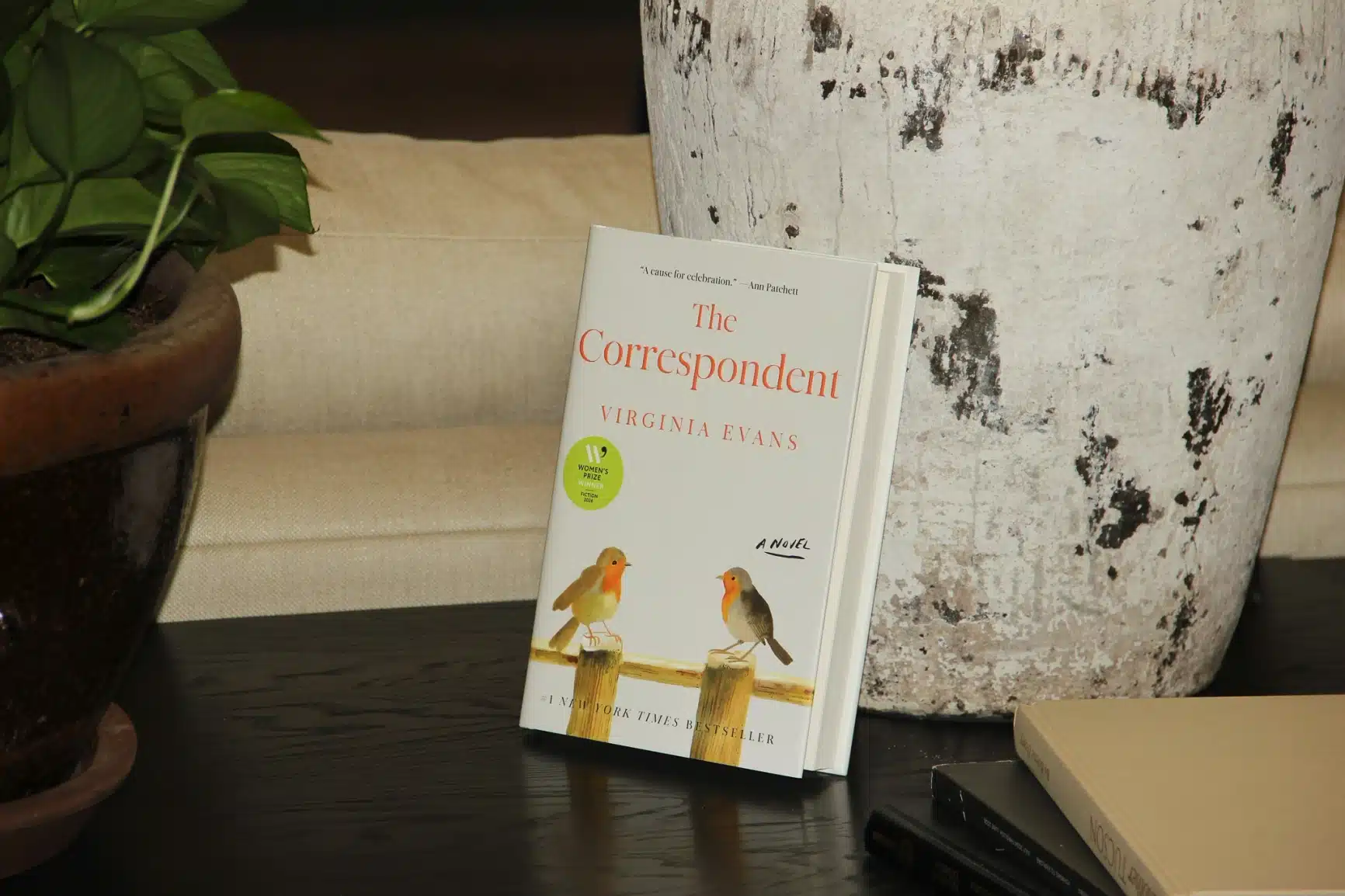
The cover is simple and warm, with two birds facing each other in a hand-drawn style of art. The cover is a strong encapsulation of the book, as the birds symbolize the back-and-forth letter writing.
The cover does not appear to be designed to catch the reader’s eye in a flashy manner. It does draw in readers with a curiosity to know more. The relatively minimalist nature of the cover does signal that it falls into the literary fiction category.
It is a classic enough cover to match any type of book case or look lovely sitting on a bedside table.
Reviewer’s Personal Opinion: A Sharp-Tongued Woman
I have been known to read a book simply for an “unlikeable” female protagonist. I find them to be interesting, complex and, ironically, very likable. Sybil falls perfectly into this category. I loved her.
This fondness isn’t to say she never did anything I found to be wrong. She definitely did, but she was also honest and witty, and ultimately offered up apologies and changed for the better. As a reader, I got to know Sybil faster than many of the people in her life, and I felt like her biggest supporter. I saw myself in her some days, and I think that feeling is a testament to Evan’s writing that a 23-year-old girl was able to relate to a 73-year-old woman.
The affinity I came to feel for Sybil and many of the other characters made the ending far harder than I would have anticipated. Sybil’s death was difficult emotionally. Her death was also difficult in that it challenged my belief that endings can be meaningful without death. I almost always believe there is a better way to end a story; however, this one was an outlier.
I couldn’t be mad at Virginia Evans because it was the perfect ending. Sybil found a type of peace and happiness at the end of her life that I think we all hope to find. As her biggest supporter, I just wished she got to live in that joy a little longer. It is clear from the emotion of the end that Evans knows how to write characters worth caring deeply about.
I chose to review this book, in part because I wanted to spend more time with it, but mostly because it moved me deeply. Books with that kind of emotional resonance deserve to be shared. In a world trending toward digital everything, the human connection this story offers up is essential.
Conclusion: An Inspirational Read
“The Correspondent” is a deeply moving story that provokes readers to examine their own life. Sybil’s loss of her son, the years of regret that piled on top of that tragic moment, and the eventual climb out of the pain is inspiring. As Sybil proves, there is no stopping pain from coming into your life, but that tragedy doesn’t mean love and connection cannot also exist. In Sybil’s own words, “…my grief has been an unbearable noise in my head for decades, and yet now, finally, I have written this letter to you and I’m surprised to find it’s finally quiet.”
I gave this novel five stars because it was full of excellent craft, robust characters, and messages resonant enough to last a lifetime. Evans navigated the challenge of jumping letters with clear signage and distinct character voices. What could have been the novel’s biggest point of contention ended up adding to its authenticity and intrigue.
Buying and Rental Options
E-Commerce Text and Audio Purchases
E-Commerce Audio Purchases

Get recommendations on hidden gems from emerging authors, as well as lesser-known titles from literary legends.