TLDR
Kaveh Akbar is an Iranian-American poet, novelist, professor and poetry editor. His writing has helped him overcome addictions, such as alcoholism.
“Because I am here / each of these things has a name.”
—From “Exciting the Canvas” a poem in “Calling a Wolf a Wolf”
“The fact that poems exist is the load-bearing gratitude upon which I have built my life.”
—Interview with NPR
Kaveh Akbar is an Iranian-American poet and novelist known for his lyrical style, surreal imagination and an ability to ground metaphysics and spiritual inquiry in concrete detail and human frailty. Akbar committed to writing poetry while in recovery from addiction, something he has spoken and written about candidly. What he describes as his “survival” of alcoholism, subsequent “responsibility to attention” and distrust of certainty informs all of his published work: spanning two books of poetry, a novel and two anthologies over seven years. He is a professor at the University of Iowa where he teaches and directs the undergraduate creative writing program.
Kaveh Akbar: A Brief Biography
Born in Tehran in 1989, Kaveh Akbar grew up speaking Farsi with his Iranian father and English with his American mother. He also describes learning Arabic phrases reserved only for prayer. They later moved to America where Akbar describes losing much of his fluency and feeling a cultural rift, a recurring subject of his work. The family moved several times, living in Pennsylvania, New Jersey, Wisconsin and Indiana.
As a child he was an overachieving math and science student whose idea of fun was to program games into a TI-83 calculator. But he was drawn to MadLibs, the fill-in-the-blanks word game book that revealed all sorts of nonsensical phrases once completed.
Akbar has been vocal about his struggle with addiction, recovery and subsequent sobriety. By his early 20s, Akbar was drinking heavily, and sometimes using narcotics and other drugs.
In a New York Times profile piece, Elizabeth Harris wrote, “When Kaveh Akbar was drinking, he would regularly wake up to find new bruises or gashes on his body, or to find that he’d lost his glasses, his wallet or his car. When he opened his eyes, he might find himself in an alley instead of in his apartment. Once, he got out of bed and realized he couldn’t walk. He had broken his pelvis.”
He described his eventual sobriety as survival, saying “It is wrong to think of God as a debt to luck. But I could have died, and didn’t.” He credits Butler University president Dan Barden with coaxing him to sobriety meetings while he was studying there, something he initially resisted but made a point to show up anyway.
Akbar steadied in his sobriety while pursuing an MFA at Purdue University, describing poetry as something he would use to kill time without relapsing, that rebuilt the synapses in his brain and colored the world around him.
In his own words, “Eleven years ago, I was pissing the bed. And now I’m living this life…the sense of whiplash is omnipresent, as is the sense of survivor’s guilt.” A theme emerged in his work and his practice: the burden, beauty and responsibility of witness: Close attention to the world around him is itself a worthy and ethical practice.
In 2014 Akbar founded Dive Dapper, a blog where he interviewed contemporary poets “whose words have shaped the way I experience the world.” After over six dozen interviews with poets like Franz Wright, Sharon Olds, Claudia Rankine and Ocean Vuong, Akbar passed the torch to Natalie Tombasco and Anthony Borruso, who have kept the blog going.
In 2017 he published his first chapbook, containing poems that would end up in his first full collection, “Calling a Wolf a Wolf,” which garnered nationwide acclaim and ignited his career. Shortly after earning his doctorate in creative writing at Florida State University he published “Pilgrim Bell” and became the poetry editor for The Nation, joining a lineage that includes Langston Hughes and W.B. Yeats.
During the pandemic, Kaveh took to long-form prose for the first time in earnest where he put himself on a “narrative diet” of two novels a week and a movie every day. He described it as a “completely kleptomaniacal education,” lifting entire phrases and literary devices from authors like Annie Dillard, James Baldwin and Toni Morrison. This frenetic period would culminate in his debut novel, “Martyr!”
In the Summer of 2022 he moved to Iowa City with his spouse, poet Paige Lewis, to join the faculty at the University of Iowa where he teaches and directs the Undergraduate Creative Writing program. In 2025 he was named Roy J. Carver Professor of English and scholar of the year.
“My life is this ongoing procession of minor miracles.”
—From The New York Times
Books by Kaveh Akbar
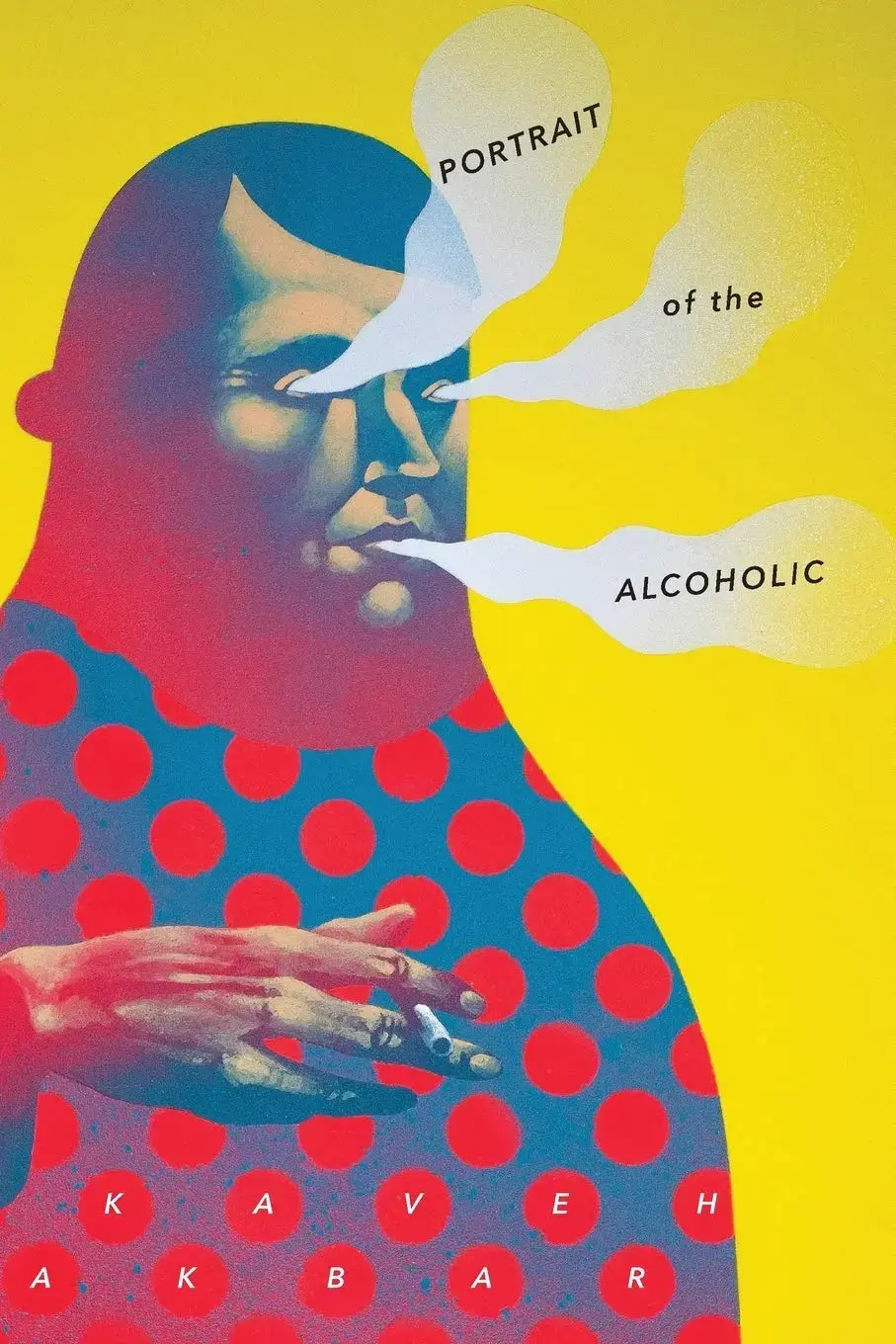
“Imagine being the oil boiling away an entire person
Today, I’m finding problems in areas where I didn’t have areas before.
—From “Portrait of the Alcoholic Three Weeks Sober”
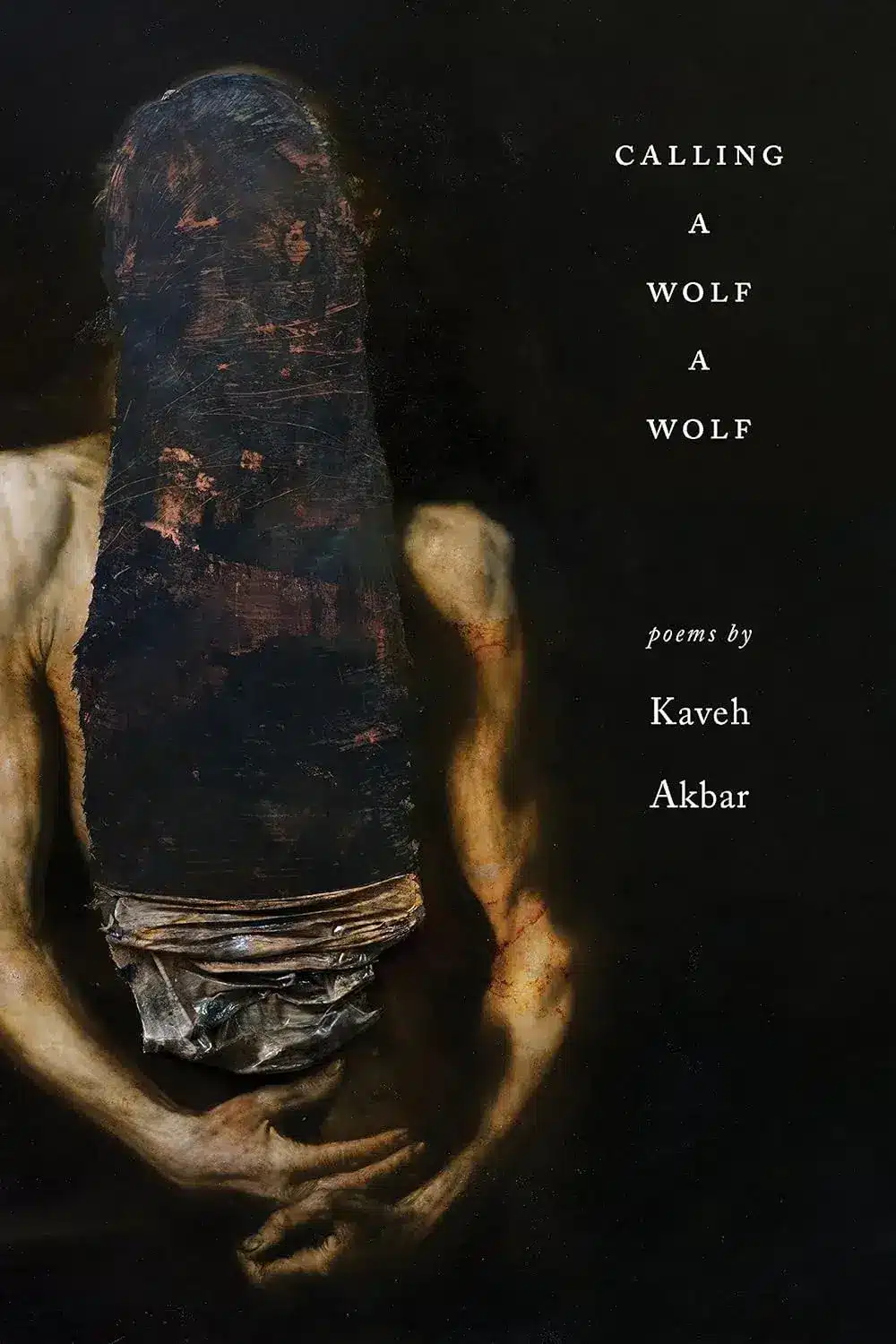
Debuting with a small and daring independent press out of New York City, Akbar lays the foundation for poems that would form his subsequent full-length collection released later the same year. Unlike the follow-up, the title is directly confessional, establishing Akbar as a poet who was willing to go there.
Readers were pleasantly surprised when the poems never devolved into spectacle or navel-gazing. Instead they were struck by Akbar’s juxtapositions, lyricism and economy of language — lines worth rereading.
Reviews
“Mecca is a moth
chewing holes in a shirt I left
at a lovers house”
—From “A Boy Steps Into the Water”
“I am not a slow learner
I am a quick forgetter
such erasing makes one voracious
if you teach me something beautiful
I will name it quickly before it floats away”
―From “Desunt Nonulla”
“The struggle from late youth on, with and without God, agony, narcotics and love is a torment rarely recorded with such sustained eloquence and passion as you will find in this collection.” — Fanny Howe
Akbar’s first full-length collection — raw, surreal, confessional, existential and even spiritual — unravels the thralls of a raging addiction, the struggle towards sobriety and tenuous life after. But readers expecting a series of diary entries would be taken aback. The poems are rarely about addiction. Instead they channel its often surreal state of mind, its intoxicating beauty, its torment, its isolating bond with the soul.
Reviewer Nick Flynn wrote, “Was it Jung who speculated that alcoholism might be an attempt at a material solution for a spiritual problem? Kaveh Akbar seems able to contain both—he’s a demotic, as well as a spiritual, poet (the only type of either I trust). Each word in this little book might rise up from somewhere deep in the earth, but they turn into stars.”
The poems seem to personify alcoholism as a higher power, a deal with the devil — a night of transcendence in exchange for a nasty hangover. As the night (and the addiction) progresses, it tends to steal our memories. The fear of forgetting is a nagging existential threat in these poems, and the ritual of naming becomes the only healing balm.
A lot of addiction poetry either glorifies depravity in navel-gazing excess or focuses too concretely on the subjective experience of becoming sober, sometimes indulging the moral victory. Akbar writes addiction poems without sentimentality or recovery clichés.
In some ways, it’s a shame the book is marketed with this slant, because it stands out as intimate and lyrical in its own right, featuring a poet grappling with God, his Persian ancestry, the nature of language, the meaning of home. Woven tightly in lyrics that waste not a word? Visceral imagery, a soaring imagination, juxtapositions that make old words new again.
Reviews
Verily, they sent down
language, filling us with words
like seawater filling a lung. You
can hear them listening now
for our listening.
—From “There is No Such Thing as an Accident of the Spirit”
“[Kaveh] Akbar is exquisitely sensitive to how language can function as both presence and absence. . . . His practice of taking language apart, and harnessing the empty space around it, makes even the most familiar words seem eerie and unexpected.”—The New Yorker
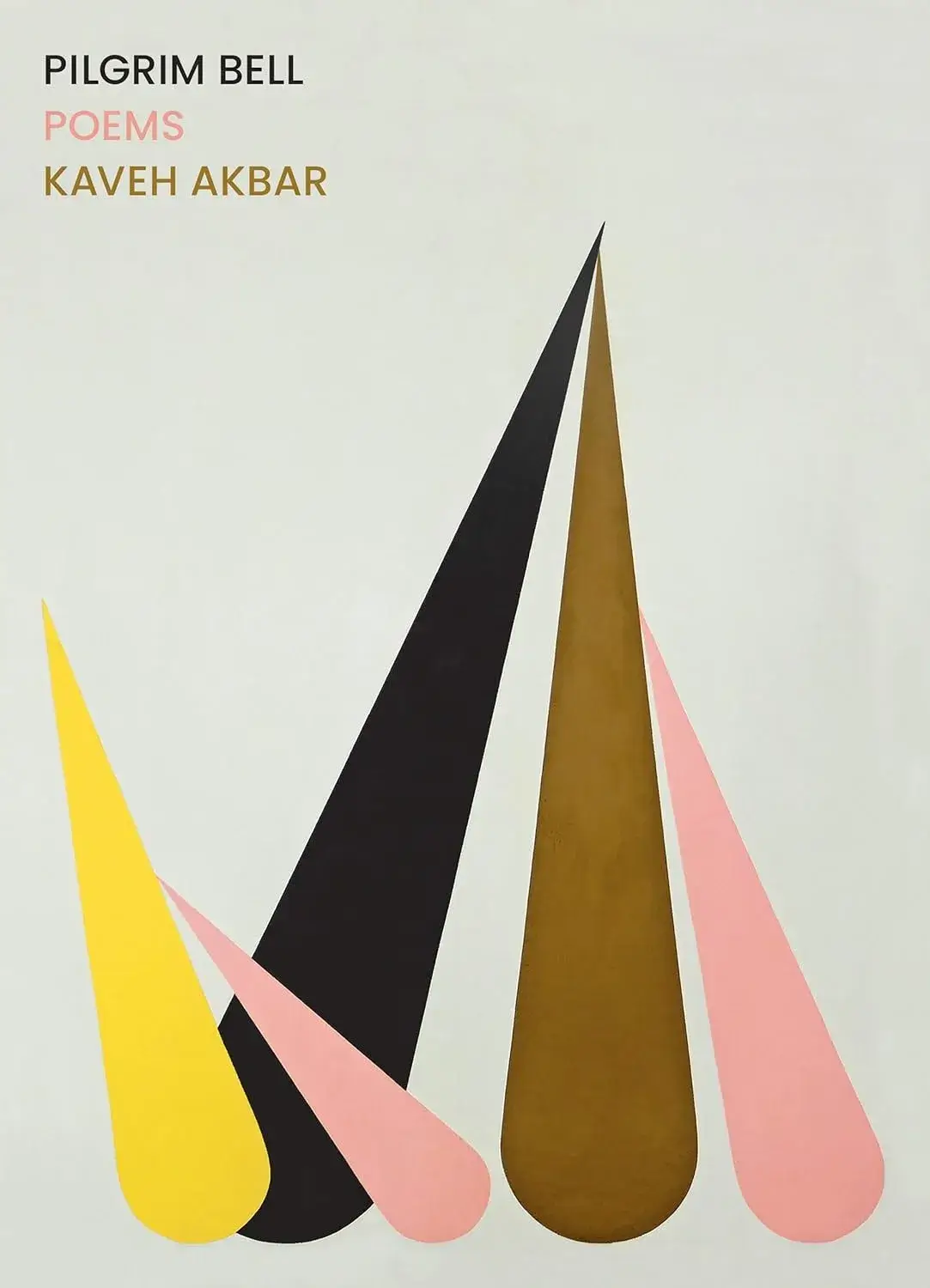
Published four years after “Calling a Wolf a Wolf,” Akbar’s second full-length collection finds the poet in conversation with the divine while grappling with the muck of lived reality. If his first book read like a dizzying surrealist confessional, “Pilgrim Bell” reads like a spiritual treatise that upends its genre. It’s an atomic collider smashing disparate ideas with precise imagery; then scanning the results for answers.
Written in the strange new skin of sobriety, Akbar investigates personal loss, faith in equal measure with doubt, and language itself — all with a piercing gaze and generous heart. And murmuring in the aisles, you can feel the state of a nation grappling with the Covid pandemic, political division under a Trump administration and Islamophobia.
Weaving a tight lyrical web (that makes you double-back to reread the last explosive line), Akbar draws on Sufi mysticism, Islamic imagery and ancient Persian poetry forms to ask: What’s still worthy of reverence? Throughout “Pilgrim Bell” the poem becomes a lamp in the dark, casting the familiar in a strange light, but also granting warmth in the strange night of the soul. Read in full, the poems reinvigorate an intoxicating sense of what’s-the-word? Bewilderment.
“Pilgrim Bell” is a book for seekers, who distrust easy answers — poems about sobriety, faith and political unrest that don’t end in a-ha moments. Instead, they invite the reader to sit with dissonance. Akbar’s poems are beautiful, songlike yet startling, with surprises lurking at the next line break. You read it to rediscover how to yearn, and how to yearn for more.
Reviews
“Love was a room that appeared when you stepped into it.”
“Akbar has written a page-turner…spiraling between inner and outer realities, connecting continents and histories, orbiting a deepening mystery. Like a Borgesian library, Martyr! is a finite book in which infinity is shelved.” —Karen Russell, Electric Lit
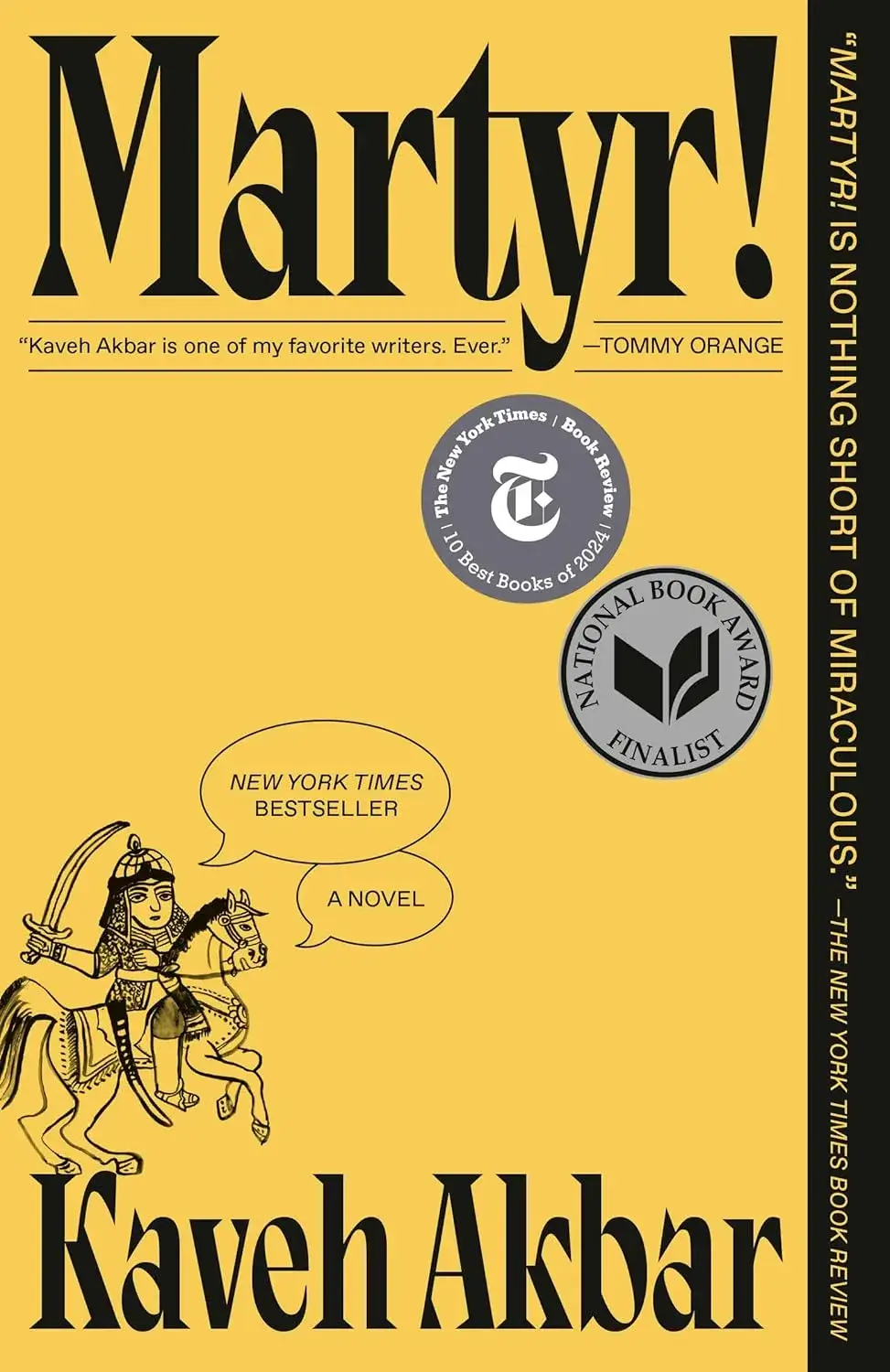
Martyr! is a fictional novel about an orphaned young man’s search for meaning unfurling into a family saga. Heartfelt, tinged with humor and sorrow, and formally ambitious, it’s a fitting debut for Kaveh Akbar’s prose. Undoubtedly built from lived experience, Martyr! manages to avoid becoming an autobiographical novel, or even auto-fiction. Akbar composts this raw material — addiction, recovery, Iranian history, obsession — and breathes it into life through Cyrus Shams.
A recently sober son of Iranian immigrants, Cyrus is grappling with depression and a deep spiritual void. His mother died tragically when the U.S. Navy accidentally downed Iran Air Flight 655. And his father just died after a grueling life spent working at a chicken processing plant so Cyrus could have a better life. After a flicker of a lightbulb he takes to be a sign from God, Cyrus embarks on a quest for a family secret, eventually leading him to a terminally ill painter making death her last piece.
Rather than following a memoir-like monologue or linear plot, Martyr! shuffles perspectives, with other voices and quoted material peppered in like a Greek chorus, as well as short essays written by Cyrus. Stylistically restless and taking a range of tones, Martyr! deals in humor and despair, metaphysics and pop culture, private grief and geopolitical trauma. Akbar brings to fiction his characteristic economy of language, sharp eye for detail, and his deep suspicion of being certain of anything.
Martyr! resists the consolations of doctrine while remaining invested in spiritual seeking, asking if surviving — the tragic flight, the raging addiction — is a responsibility worthy of taking on. And if it is — how Cyrus, how we, might continue living, loving, and witnessing in a world where neither blind faith nor cynicism feel right.
Reviews
Editing Work
“Arabic gets an asterisk because I never really spoke it, I just learned to pray in it…Today I have no idea what I mean when I say God and I say it a lot.” —From the Introduction.
“A profoundly valuable collection, full of fresh perspective… poetry that detaches us from the world of instant gratification.” —Rowan Williams, Former Archbishop of Canterbury
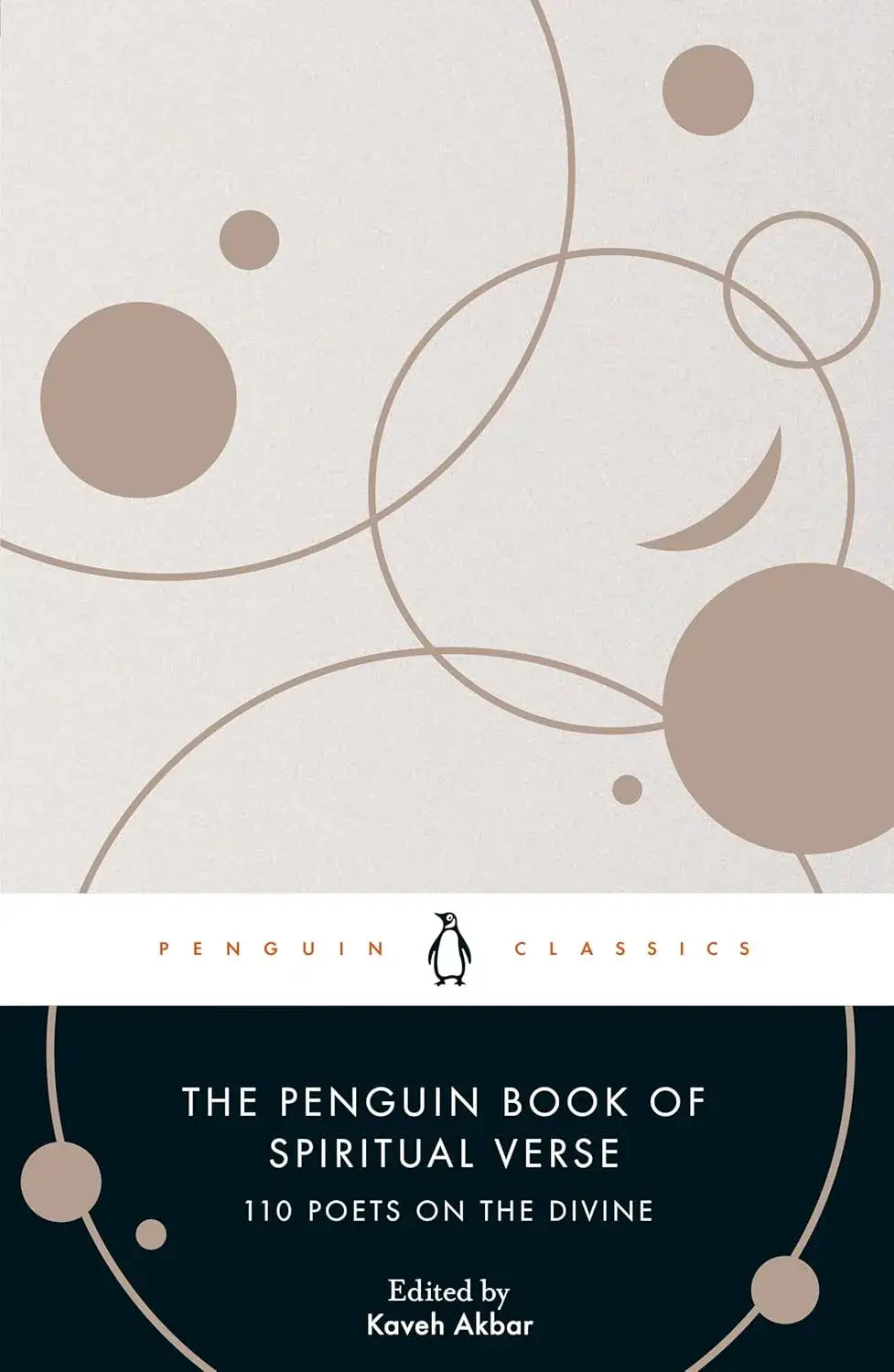
Drawing on his own trajectory as a poet, Akbar debuts his curatorial powers in this sweeping anthology driven by his own preoccupation with devotion, doubt and the divine. Laid out chronologically and following a wide range of spiritual traditions — Islamic, Christian, Jewish, Buddhist, Hindu, mystics and secularists alike — Akbar puts ancient, medieval and contemporary voices on equal footing. Among canonical choices, Akbar also peppers in poets who resist doctrine.
He writes in the introduction, “A common formulation states that prayer is a way of speaking to the divine and meditation a way of listening for it. Poetry synthesizes these.”
These are poems that treat prayer, silence, surrender and longing — for meaning, motivation and comfort — as deeply human drives that have given rise to soaring verse throughout the ages: From the earliest ascribed author, the ancient Sumerian priestess named Enheduanna (writing two thousand decades before the common era) to the ever-searching Brazilian poet, Adelia Prado, writing poems that surfaced to wider acclaim in the 90s.
Published with the longstanding Penguin Classics imprint, the anthology positions Akbar not only as a poet devoted to his personal practice but one invested in finding more audiences for poetry and expanding the modern reader’s conception of spiritual verse.
Akbar laments how today’s fast-paced consumer society cheapens language with “passionate absolutes.” “Poetry,” he continues, “asks us to slow down our metabolization of language.”
Reviews
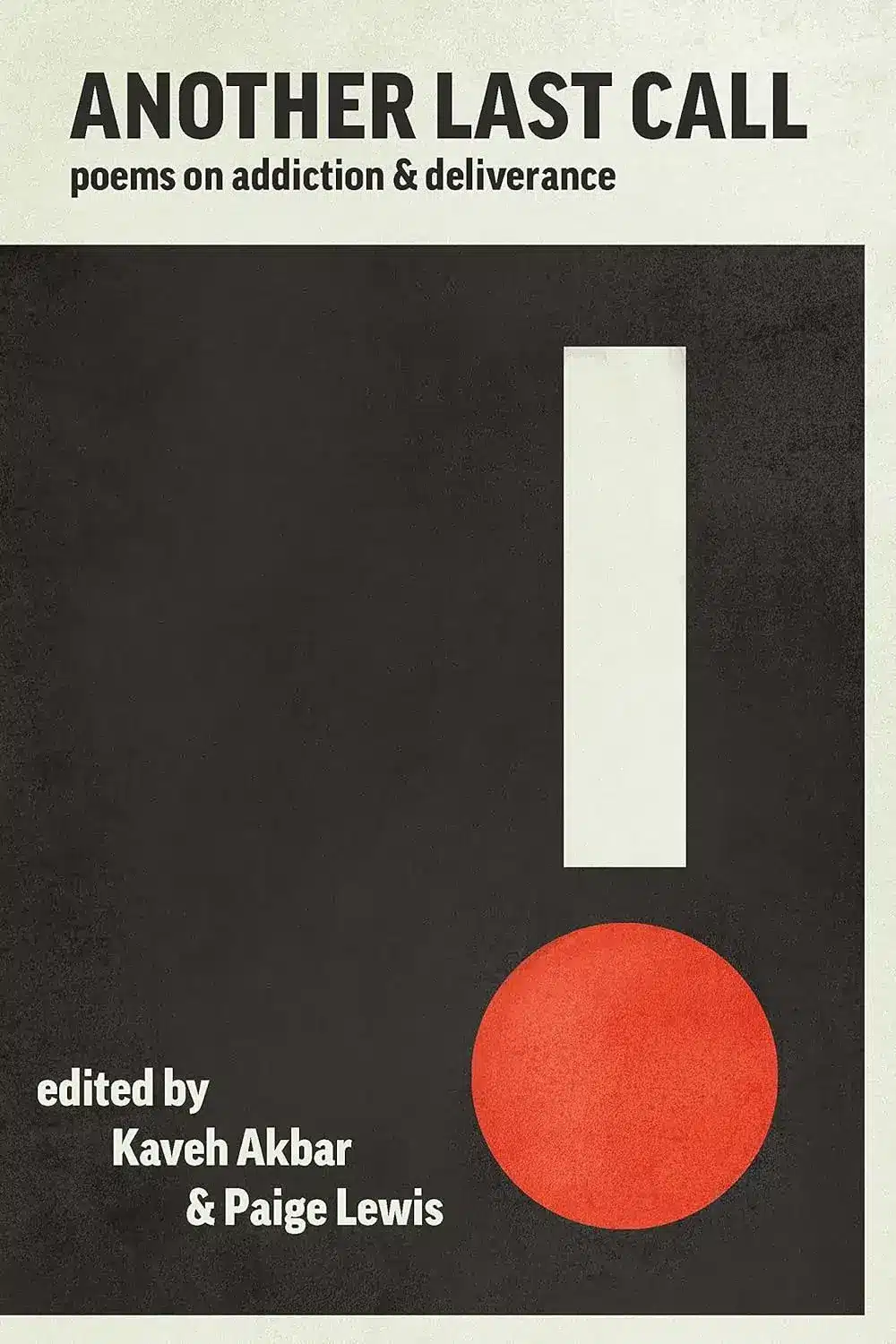
“For many poets here, poetry was a place to put themselves on that journey [to recovery]. Language is a place to go as the new self forms, a safe place to store body and mind.”
—From the Introduction
“Another Last Call” seems to have two meanings. It could just be a cheeky way of announcing a sequel to Sarabande’s first anthology, “Last Call.” But it could also be figurative: another kind of last call, a calling beyond addiction.
More than 25 years later, Akbar and his spouse and poet Paige Lewis present their own curated “mixtape” of contemporary poets, all — directly or indirectly — addressing substance abuse. As the publisher describes it, “[The book] refuses the neat arc of collapse and redemption, offering instead a lived, plural understanding.”
Featuring poets like Joy Harjo, Diane Seuss, Layli Long Soldier, Sharon Olds, Jericho Brown, Ada Limón and Ocean Vuong, each poem either addresses the throes of addiction, the never-ending road of recovery or the impact addictions have on others. Along the way, the poems seem to treat addiction as a rich and varied lived condition, dealing with themes of desire, grief, relapse and survivor’s guilt. It becomes clear the editors are motivated in framing addiction not as a moral failing but a human sickness: an attempt to navigate or avoid pain and existential angst. Poetry becomes the force to rebuild webs of meaning and illuminate a shared struggle.
This is a book that wags no fingers; nor does it hold your hand. Instead it’s like a vigil for wherever you are on the journey.
Reviews
Kaveh Akbar’s Writing Style and Themes
Style: Modern Confessional, But Hard to Define Overall
“In the world of imagination, all things belong. If you take that on faith, you may be foolish, but foolish like a trout.” – Richard Hugo, “Triggering Town”
Across two books of poems, a novel and two anthologies, if his body of work could leave one impression, it would be bewilderment. Nagging, intoxicating, yearning, Kaveh Akbar seems ever willing to trust the whims of his imagination without worrying what it means — as if we can hotwire the rational mind, in writing as in reading, and hit upon the more important, oft neglected, meaning-making of the subconscious.
He is certainly not the first poet with this ethos that can be traced back through James Tate, John Berryman, Sylvia Plath, Elizabeth Bishop and others. It’s difficult and possibly futile to pinpoint exactly what makes Akbar special. Afterall, he’s been open about his “kleptomaniacal education”. But it’s clear that whatever imagery, pet words or devices he’s stolen, he has stolen so greedily and internalized so heartily that his unique voice emerges: self-effacing, at times darkly funny, tender, honest.
A word cloud reveals “body,” “God,” “pray,” “fear,” “trust,” “memory,” “home,” “cat,” “stars,” “bone,” various flowers and a strange obsession with throats. His lexicon is disarmingly plainspoken. The writing almost always feels intimate. But his juxtapositions spark fresh meanings, making the familiar unfamiliar.
It could be said some poems follow the looser mode of the prayer. If Akbar is spiritual, it is always through a deeply personal mysticism: one that does not cling to comforting assurance.
Time and again Akbar has resisted certainty with an almost religious conviction. In an interview with Poets & Writers he said, “The English language is the most violent technology mankind has ever invented… So whatever it’s certain of, I reflexively distrust.” He goes on to note, “There’s the Sufi prayer that goes, ‘Lord, increase my bewilderment.’ That is the entirety of the prayer. That’s what I’m after.” In his poem, “Do you Speak Persian” he writes, “I have been so careless with the words I already have.”
Always flowing somewhere, his poems seem to trust that the next line always belongs. Always shifting between deep heady ideas and often visceral imagery, his poems demand, apologize, beg, question: “you” the reader, God, himself, beloveds, even empires. He does so using forms like the ancient Arabic Ghazal (pronounced “guzzle”) which are built on couplets and feature a refrain whose meaning deepens on every pass. It’s no wonder Akbar is drawn to the form which traditionally included both erotic longing and religious sentiment, often in the same poem.
Some poems are short and narrow, sometimes claustrophobic, without punctuation, leaving the reader to sweat for natural pauses. Others insert periods after fragments, stuttering the reader’s flow. Akbar plays with white space, in “Pilgrim Bell” especially, as if he wants us to squirm in bouts of silence. Many poems embrace elision — where one thought seems to end only to continue on the next line, leaving us to wonder which was the intended meaning. In “Pilgrim Bell” he writes, “My savior has powers and he needs. / To be convinced to use them. / Up until now he has been. / A no-call no-show.”
Akbar also has a way of disarming the reader using very natural, conversational modes in figurative, sometimes metaphysical, ways: using logical arguments, if/then statements, common syntax or rhetorical refrains. For example: “God loves the hungry // more than the full.” or “If home is the question, / the honest answers must all be elegant / forgeries.”
Sometimes he disarms us with familiar sounding aphorisms in the form of some token of wisdom. “Paradise lies at the feet of mothers.” Or, “The body is a mosque borrowed from heaven.” Or, “Tears fall on a stone and the stone suddenly / wants eyes.” It’s not a stretch to think that his learning Farsi with hindsight, its literal translations, must have fed his figurative powers.
The fact that most of his poems are deeply lyrical but set in logical grammar; use plain language, familiar rhetorical flourishes, and MadLib aphorisms; are visually clean using mostly neat stanzas and tidy line breaks; all serve some cumulative effect: Poems that break through our defenses and deepen our sense of intoxicating bewilderment.
On His Prose
Whether Akbar intends to write more prose remains to be seen. However, with “Martyr!” he has already shown how his ethos, imagination and wizardry with language can carry over into a novel. In a review for NPR, Gabino Iglesias wrote, “As a poet, Akbar is a master of economy of language, and that mastery remains untouched in this 350-page novel.”
Akbar carries his distrust of certainty into narrative form, but with an important distinction: where the poems feel intimate, the novel keeps us just at arm’s length. The book’s protagonist Cyrus never narrates himself. Instead he is spoken of by friends, lovers, artists, even ghosts of the past — like a Greek chorus. The prose may contain Akbar’s lyric density and fondness of metaphor, but it’s more argumentative, willing to digress into art criticism, history and absurd humor. If the poems sound like prayer uttered under the breath, “Martyr!” feels more like a public art piece — thinking aloud, revising itself.
Akbar’s Political and Cultural Views Expressed Outside of Books
“Language is the most murderous technology we’ve ever invented.” —From an interview with The Believer
Kaveh Akbar resists party affiliation or producing work that is explicitly political. He instead champions moral complexity and spiritual inquiry as ways to resist the commodification of language, which he sees as a tool used by empires and bureaucracies to whitewash violence by turning bodies into numbers, deaths into incidents and using grammar to avoid responsibility.
However, he has been vocal on a number of core issues, establishing him as a clear opponent of imperialism, Islamophobia, mass incarceration and mass media spectacle.
As an editor of The Nation, Akbar has welcomed and published incarcerated authors without drawing attention to that fact, a strong stance against voyeurism and stereotypical framing that emphasizes fall and redemption.
Akbar has repeatedly and clearly condemned American military power and empire, speaking out against mass deaths from drone warfare and, more specifically, the shooting of Iran Air Flight 655. In an interview with PBS, he said, “I have always been fascinated by this event, and nobody in America knows about it… You hear a number like 290 people were killed on board. If that number was 289 or 291, it wouldn’t make a difference intellectually, right? But that’s a life.”
He is especially concerned with the way technology and diplomatic jargon distances nations from the violence they commit.
Regarding immigration and Islamophobia, Akbar has spoken about living as a Muslim in the U.S. under constant suspicion and the toll of being asked to “explain” or “represent” Islam.
He said, “You get this way in which you tell people you were raised Muslim where they just assume you came out of the womb holding a Qur’an with a full beard.”
In a conversation about Muslim writers on the American literary scene, he said, “We are now suddenly this group that is very visibly proximal to an imminent political and bodily danger at the hands of a state and at the hands of the people… Suddenly there’s a lot more editorial interest in what Muslim writers are up to.”
Awards
Individual Honors
Pushcart Prizes (2016) Honor the best poetry, fiction, and essays published by small presses.
Ruth Lilly/D.S. Rosenberg Fellowship (2016)
Awarded by the Poetry Foundation.
Lucille Medwick Award (2016)
Civitella Ranieri Fellowship (2021)
Guggenheim Fellowship (2024)
‘Calling a Wolf a Wolf’
Ploughshares John C. Zacharis First Book Award
Other Awards and Recognition
2017 Foreword INDIES Book of the Year Awards Gold Winner
Florida Book Award Gold Winner
‘Pilgrim Bell’
Time, NPR, Guardian Best Book of the Year
Forward Prize Best Collection (shortlist)
Maya Angelou Book Award finalist
Library Journal Best Poetry of 2021
‘Martyr!’
Other Awards and Recognition
Library Journal Best Books of the Year
New York Times Bestseller
National Book Award finalist (Fiction)
Waterstones Debut Fiction finalist
International Dublin Literary Award longlist
Brooklyn Public Library Book Prize finalist
‘The Penguin Book of Spiritual Verse: 110 Poets on the Divine’
2022 Spirituality & Practice Award
‘Another Last Call: Poems on Addiction and Deliverance’
The Rumpus “Most Beautiful Books of 2023”
Official selection of The Rumpus Poetry Book Club
Caroline (Prologue Bookshop), “Top Reads of 2023”
Carmichael’s Bookstore, “Favorite Books of 2023”
Quotes from Kaveh Akbar
“If you’re reading that much poetry, and you’re doing it seriously, it’s going to come out of you. Not because you’re inspired, but because it becomes part of how you think.”
—Poetry Foundation’s “VS” Podcast
“I think people get this idea that poetry is supposed to sound highfalutin or distant. But bringing pleasure, humor, even awkward delight into the conversation — that matters to me.”
—Poetry Foundation’s “VS” Podcast
“Language is the most murderous technology we’ve ever invented…Poetry doesn’t purify that…The best it can do is illuminate, like an X-ray.”
—Interview with The Believer
“I’ve given this coldness many names/ thinking if it had a name it / would have a solution / thinking if I called a wolf a wolf I might dull its fangs”
—From “Calling a Wolf a Wolf”
“Mecca is a moth / chewing holes in a shirt I left / at a lovers house”
—From “Calling a Wolf a Wolf”
“I am not a slow learner / I am a quick forgetter / such erasing makes one voracious / if you teach me something beautiful / I will name it quickly before it floats away”
—From “Calling a Wolf a Wolf”
“Tears fall on a stone and the stone suddenly / wants eyes”
—From “Calling a Wolf a Wolf”
“All I know about science—
neurons, neutrinos, communicable
disease—could fit inside
a toothpick, with wood to spare.”
—From “Pilgrim Bell”
“Show me one beast
that loves itself as relentlessly
as even the most miserable man.
I’ll wait.”
—From “Pilgrim Bell”
“The only people who speak in certainties are zealots and tyrants.”
—From “Martyr!”
“Active addiction is an algorithm, a crushing sameness. The story is what comes after.”
—From “Martyr!”
Author Links
Homepage: https://kavehakbar.com/
Poets.org: https://poets.org/poet/kaveh-akbar
Poetry Foundation: https://www.poetryfoundation.org/poets/kaveh-akbar
Divedapper, a blog Akbar launched to interview contemporary poets.
Similar Authors
Franz Wright
H. Auden
Sohrab Sepehri
Jorge Luis Borges
James Baldwin
Toni Morrison
Max Ritvo
Ocean Vuong
Danez Smith

Get recommendations on hidden gems from emerging authors, as well as lesser-known titles from literary legends.