TLDR
Tillie Olsen was primarily a short story and essay writer. As a communist activist, she focused on working class and feminist struggles. Unfortunately there is some evidence that she wasn't honest about certain details of her life.
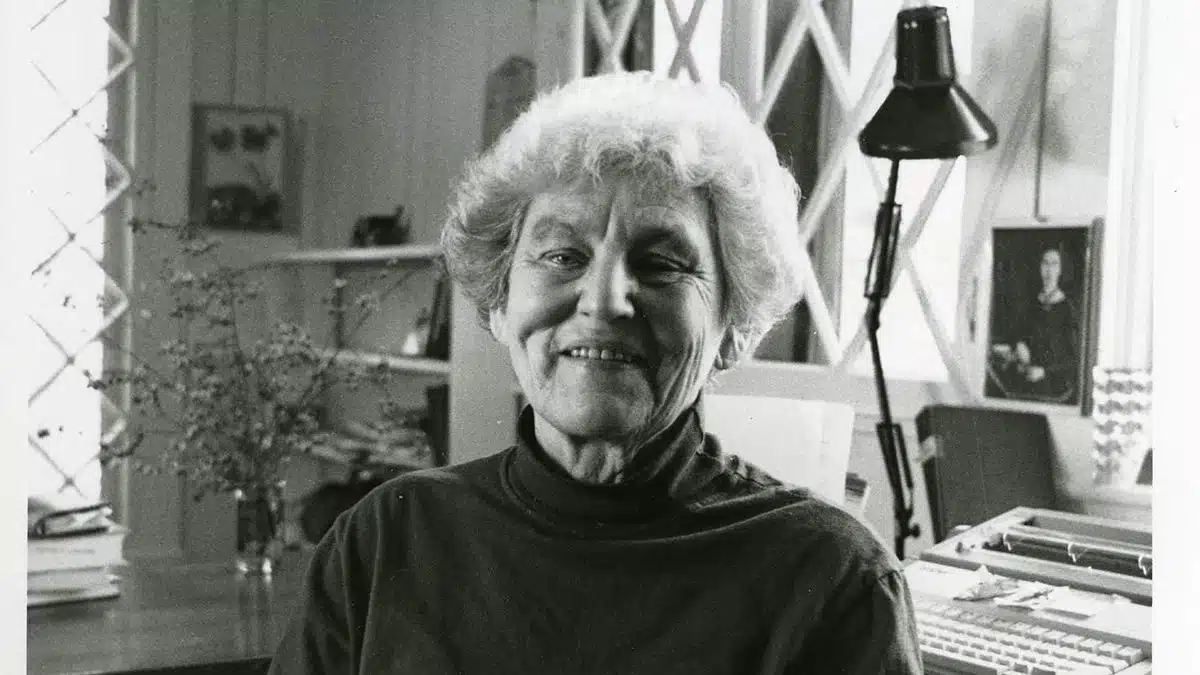
Tillie Olsen was an American-Ashkenazi (Jewish) writer and social activist born in Nebraska (her specific place and date of birth is unconfirmed, but commonly referenced as January 14th 1913) to Jewish-Russian immigrants. Her writing reflected the inner lives of the working poor, women and minorities. Her interest in the lives and work of neglected women’s writing would go on to inspire the introduction of academic programs into women’s studies in the United States.
Olsen was lauded during her lifetime by scholars, including the American Academy of Arts and Letters, who commended her in 1975 for creating a freshly poetic form of fiction.
Olsen began writing her first novel in 1932, which aimed to expose the indignities of the poor workers during the Great Depression. She returned to work on the novel in 1933, as well as writing skits and political poems, published in various newspapers and journals. The Partisan Review also published the start of her first novel, “Yonnondio: From the Thirties,” re-titled as a short story, “The Iron Throat.” She abandoned the novel during the 1930s. It was not until 1974 that she finally saw her only novel published.
Olsen declared feeling that domestic duties led to an erosion of a woman’s selfhood. She turned her attention to literature, vowing to reflect the topics around women’s lives. She saw both women’s experiences and the effects of poverty on mixed-race communities as absent within contemporary fiction. She eventually published three largely autobiographical stories and one novella in which she attempted to distill large issues into seemingly domestic stories. The first of these, “I stand here ironing,” examines a mother’s guilt in how she raised her young daughter. The story explores the limited childcare options for a working class single mother who needs to work. It was reprinted in “Best American Short Stories” in 1957.
“Tell Me a Riddle,” featured in Olsen’s 1961 story collection, became one of the foremost pieces of work for which Olsen was remembered.
Olsen also wrote an essay collection entitled “Silences,” examining disenfranchised literary voices and the forces seeking to silence them. The collection was hailed as groundbreaking, particularly in its focus on the writing of marginalized women and the working-classes.
Tillie Olsen: Activism and Controversy
Tillie Olsen was born Tillie Lerner, the second child of Ida Goldberg and Sam Lerner, Jewish socialist parents, who had played a part in the 1905 Russian Revolution. Olsen’s father, facing death or exile in Siberia, escaped to England before emigrating to New York City in 1906. Her mother joined him in 1907. The family initially settled in Nebraska, but, following their failure to make it as farmers, moved to North Omaha to live among a community of Jewish immigrants. The couple never married, but raised six children together, remaining active in their political beliefs.
Tillie Olsen was said to be a brilliant child in school, though somewhat wild, and moved rapidly through grade school, graduating in 1924. In high school she wrote a popular humor column, and her wild and spirited nature led her to sexual experimentation at an early age. Her sex life resulted in a pregnancy at the age of 16, and she temporarily left school. However, shortly after she returned to school, she left again without graduating, citing ill health and an abortion. There is uncertainty as to whether she chose to do so or was expelled.
Despite being influenced by her parents’ political activism, Olsen lived independently of them from a young age, joining the Young Communist League. She traveled to Stockton, California, the day after her eighteenth birthday in 1930 with fellow member Abraham Jevons Goldfarb, whom she married the following year. While attending a communist training school in 1930, she was arrested for fomenting worker protests. She contracted what was thought to be pleurisy or incipient tuberculosis during this incarceration, leading to her release in 1932. Her husband took her to stay with his sister in Minnesota to convalesce. This location is where she started writing.
Olsen’s first novel exposed the indignities of the poor workers during the Great Depression. She was inspired by proletarian novels and women’s writing that exposed their own experiences, as well as that of the lower classes. Her novel sat unfinished, however, as she became more involved with the Communist Party and gave birth to a daughter, Karla, named after Karl Marx.
She returned to work on the novel in 1933, leaving Karla in the care of a sister-in-law and assisting her husband as a part-time secretary. She wrote skits and political poems during this time, getting published in various newspapers and journals. During this time, she produced flyers for the strike on San Francisco’s waterfront after relocating there with her husband to support the workers.
Olsen faced another spell of incarceration but under an alias to ensure that nobody realized she was the author of “The Iron Throat.” However, nationwide publicity circulated, revealing her true identity and leading to her release. She continued to support the strikers by writing powerful articles that helped to secure a publishing deal for her first novel. She signed a publishing deal with Random House. Despite receiving a generous advance however, Olsen failed to deliver a finished novel.
Leaving her husband, Olsen moved in with Jack Olsen, one of the waterfront strikers, during the mid-1930s, sending her daughter, Karla, to live between her sisters’-in-laws. She gave birth to two more daughters to Jack Olsen, and married him after his deployment in WWII in 1944. She then became a powerful voice within women’s war work, writing a popular column entitled “Tillie Olsen Says.” Following the war, the couple’s final daughter was born. Both Jack and Tillie lost their jobs and livelihoods as both the Cold War intensified and the House Un-American Activities Committee began investigating alleged communist activities.
In 1963, Olsen gave a seminar talk at Radcliffe College. In this lecture, she pointed out how lack of education or the demands of mothering could affect a woman’s capacity to write. She suggested how women’s talents can become thwarted by such circumstances.
This assertion coincided with the release of Betty Friedan’s “The Feminine Mystique,” helping to inform the Women’s Movement of the 1960s. Olsen’s speech was revised for Harpers in 1965 and renamed “Silences: When Writers Don’t Write.” It was this publication to the mainstream that catapulted Olsen into a feminist icon.
Her devotion to forgotten women writers led to the development of the Feminist Press in 1970. This discovery of forgotten women writers was gathered into “Tillie Olsen’s Reading Lists” in Women’s Studies Newsletter in 1972-73. This anthology directly influenced the Feminist Press’s reprint series. She also finally published her novel as “Yonnondio: From the Thirties” and wrote several essays about the forces that interfere with the formation and expression of literary talents. These works were collected in “Silences” in 1978. This book is often held up as one of the foremost essay collections for understanding the forces affecting the creative output of writing women, and it became hugely influential.
Throughout the final decades of her life, Olsen continued to receive grants and fellowships from prestigious universities and made a career out of giving lectures all over the U.S. Unfortunately she failed to produce much of the work she promised to publishers and grant organisations. Continuing to present herself as a disadvantaged woman writer affected by poverty, discrimination and motherhood, she spent much of the 1970s and 80s living alone to write.
Olsen continued to remain vital and energetic until her final three years, despite a lifetime of illness. She succumbed to Alzheimer’s disease on January 1, 2007 at the age of 94.
Her legacy was marked by confusion and controversy. Though a lively and humorous speaker, she appeared to have fabricated some of the issues she wrote about in her essays. She cited that she was kept out of school until the age of nine due to a perceived disability that was later shown to be incorrect on education records. She also stated that her father worked in a meat-processing plant in Omaha, which again was proven to be incorrect. She was even reportedly known to deny the existence of her first husband.
Many of the books she professed to be writing also likely did not exist. It has been suggested that some of this misinformation was down to the projection of her adoring fans, who looked to her as a feminist hero who had overcome adversity. Critics have suggested that the collusion among the public led to Olsen’s acceptance as a heroic figure, and that she in turn readily accepted this part.
Whatever the truth about Tillie Olsen, she made an impact on the discussion around literature and the domestic within 20th century America.
Editorial Note: Image Credit to MacDowell
The Books of Tillie Olsen
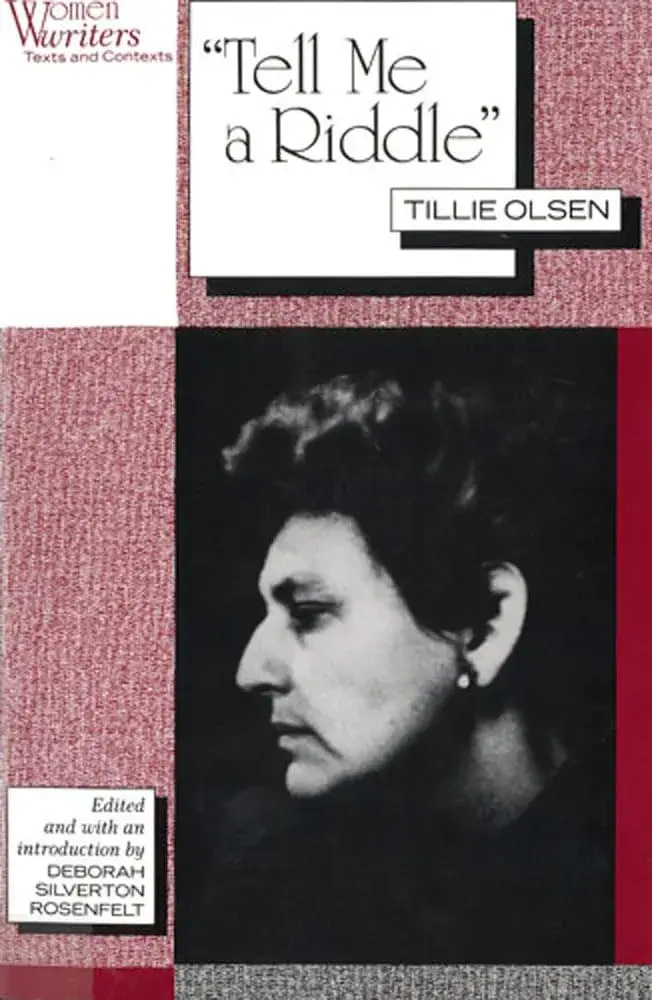
This is a collection of four stories, including the title novella and perhaps her most influential story, “I Stand Here Ironing.” Like much of her work, it highlights the domestic struggles and social issues facing women. Critics responded to her writing in “Tell Me a Riddle” as original and incomparable in its richness. The American Academy and Institute of Arts and Letters cited her work as “very nearly constituting a new form of fiction.”
Reviews
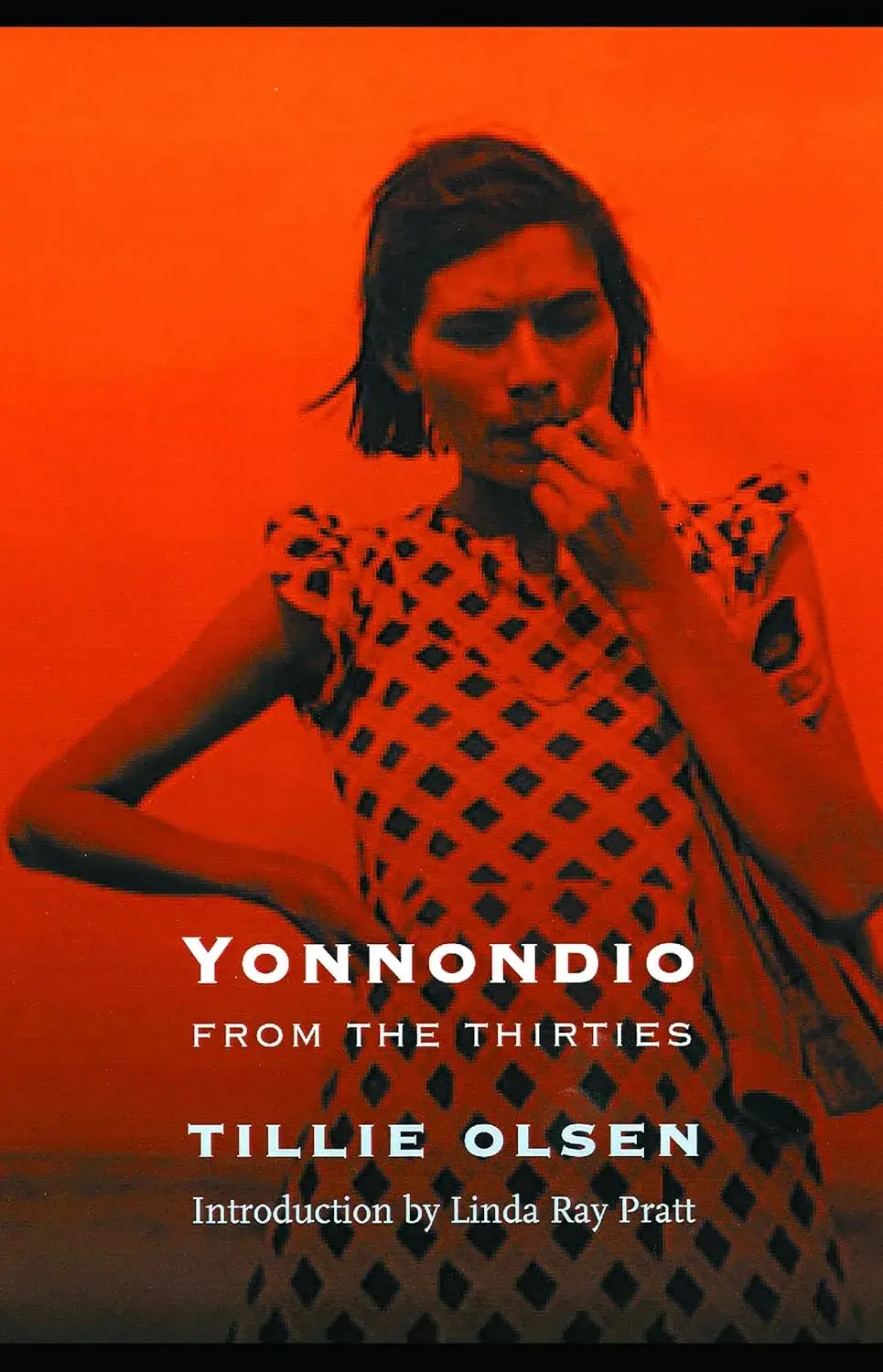
“Yonnondio: From the Thirties’” was Olsen’s only published novel. It tells the story of the struggles of a poor Midwestern family in the 1930s. Olsen received a generous advance for the book following an extract reframed as a short story appearing in The Partisan Review under the name, “The Iron Throat.” It is an experimental novel. Reviewing Olsen’s single novel in 1974, some critics found it to be “moving and often powerful, but rough-edged and fragmentary.” Olsen’s novel sometimes features in editions alongside “Tell Me a Riddle.”
Reviews
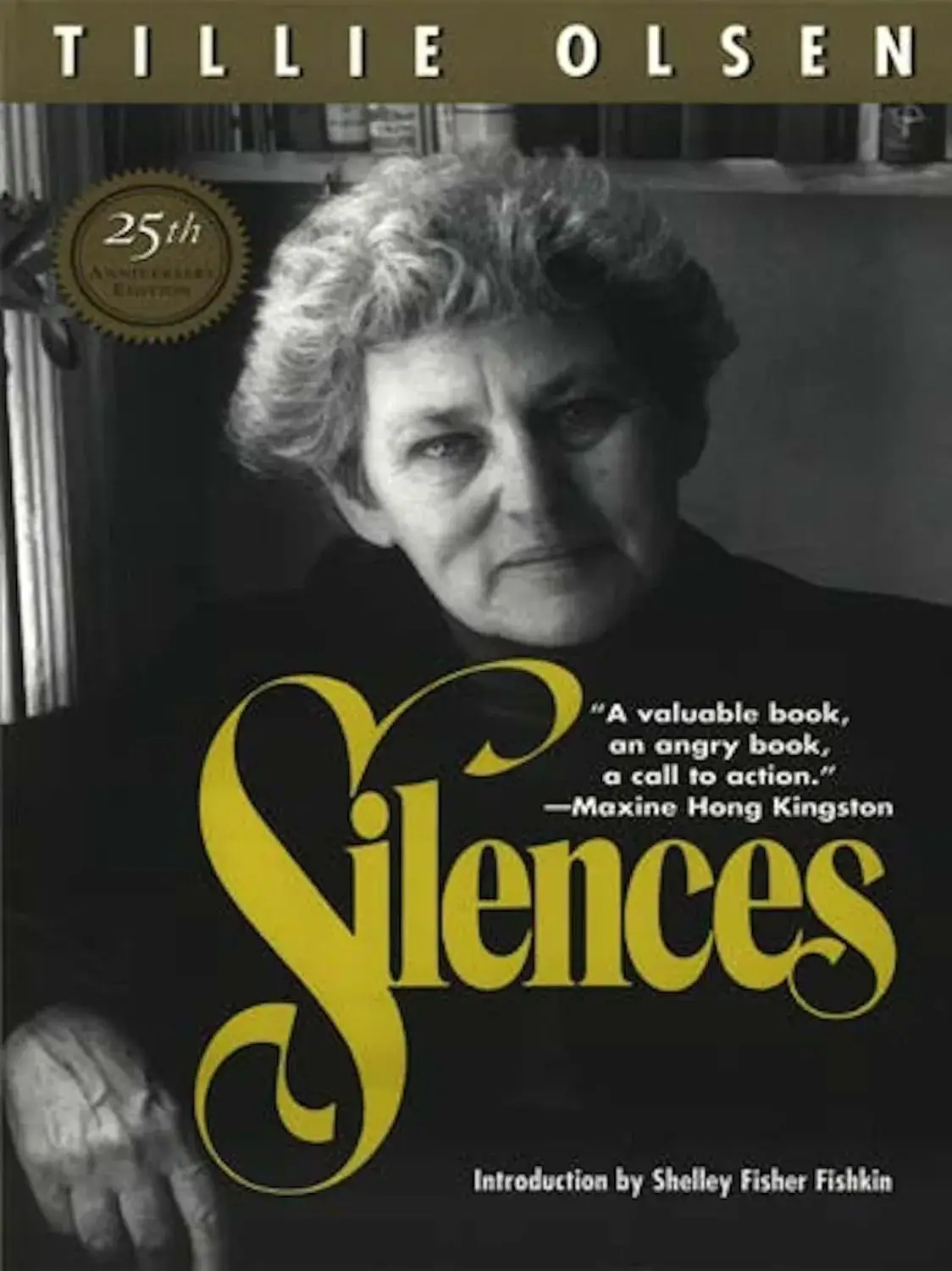
In this collection of essays, Olsen explores the obstacles to creative work faced primarily by women. It opened up the conversation on the silencing of women’s voices and that of the working-classes. It became a classic feminist text with many critics claiming that it still holds an overwhelmingly contemporary significance.
Reviews
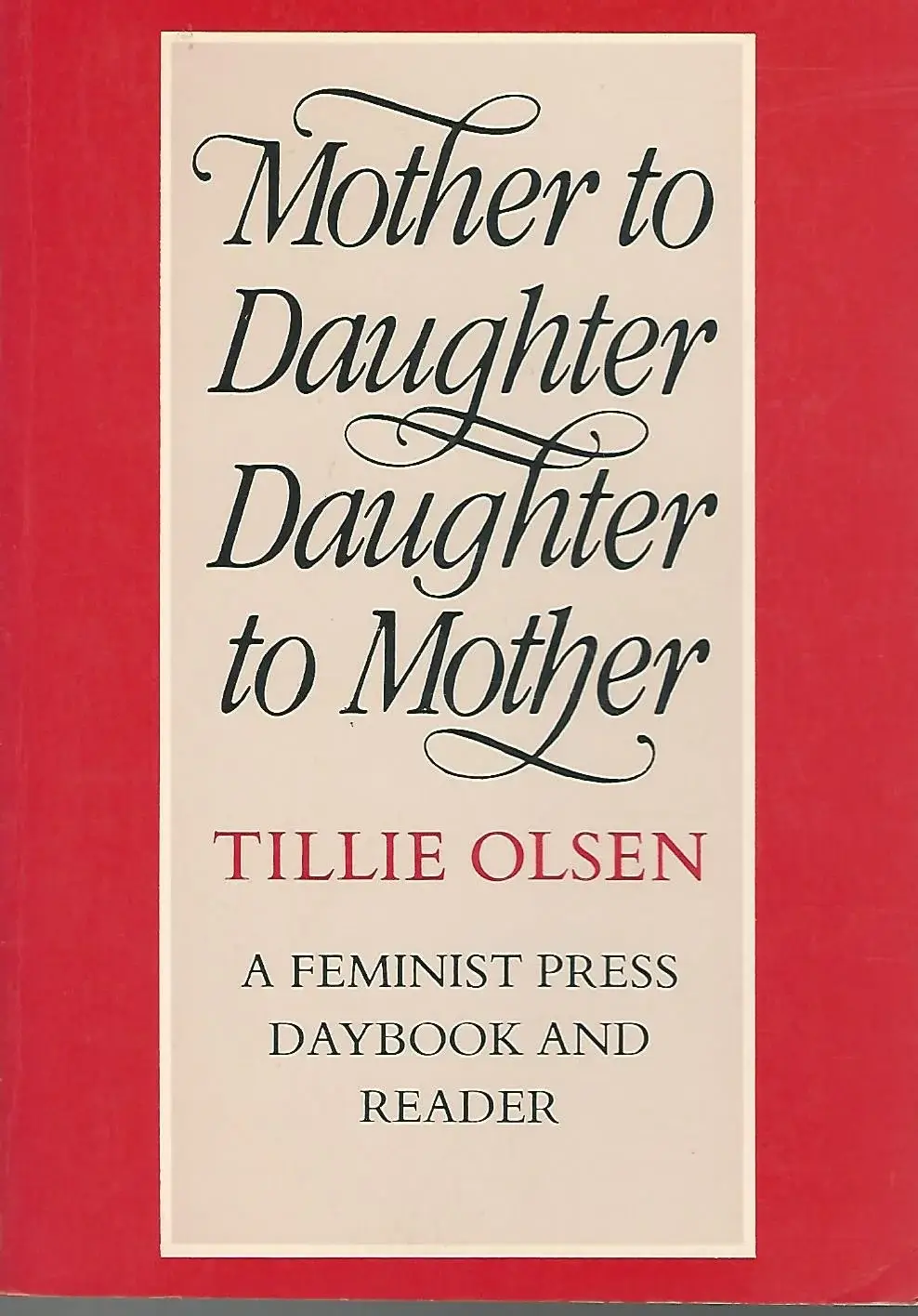
Anthology of 120 writers of prose, poetry, memoir and song. Olsen personally selected these from influential feminist writers such as Gloria Steinem, Grace Paley, Simone de Beauvoir, Alice Walker and Virginia Woolf. On reviewing the book, The Women’s Library of Glasgow responded that it was difficult to review as it is “not a book as much as it is a project.” They state, however, that the editor, Olsen herself, acknowledges it as such. They also appreciate how the book helps to contextualize the women who nurture other women.
Reviews
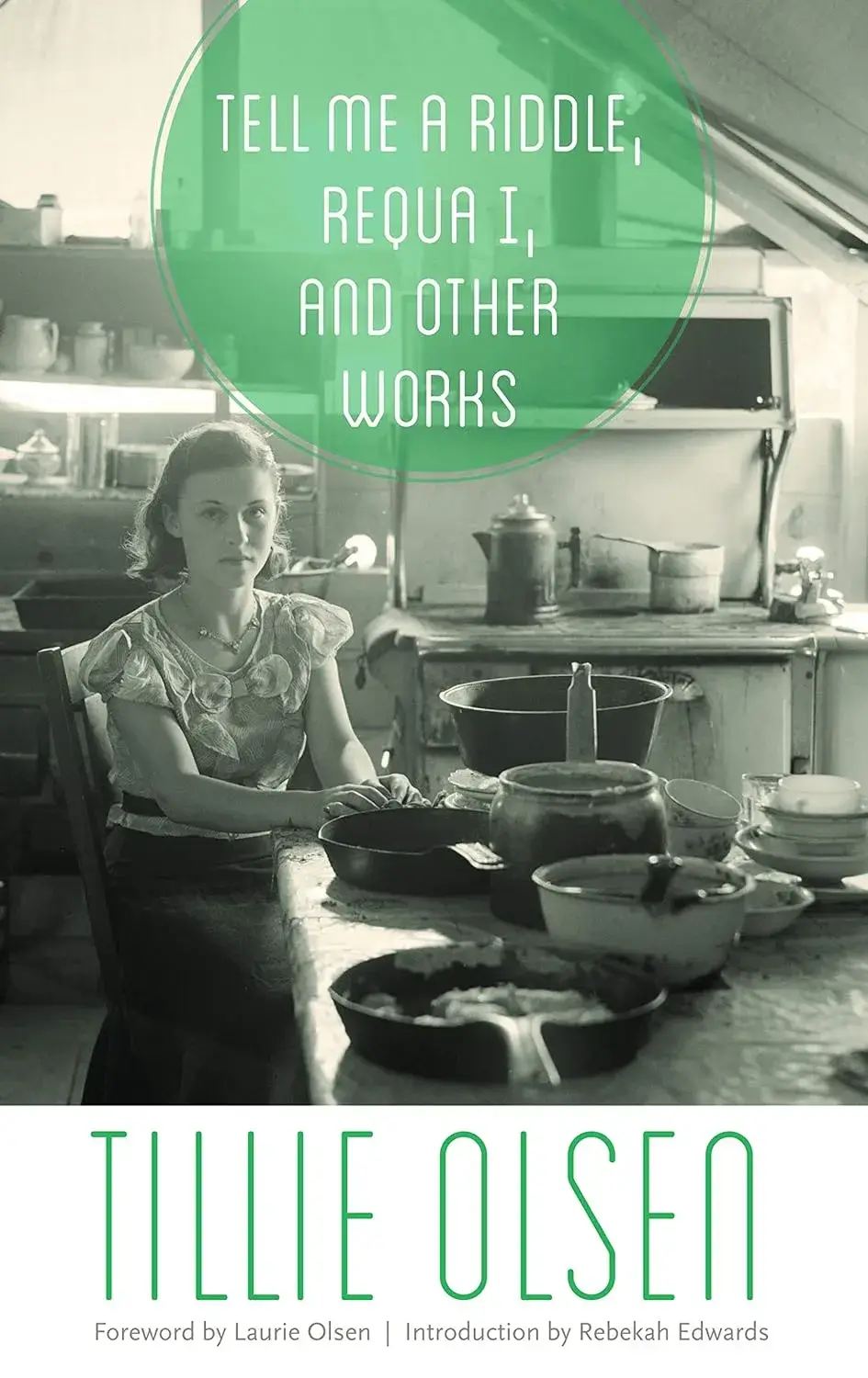
This is a posthumously published collection featuring Olsen’s previous short stories alongside pieces of her journalism.
Reviews
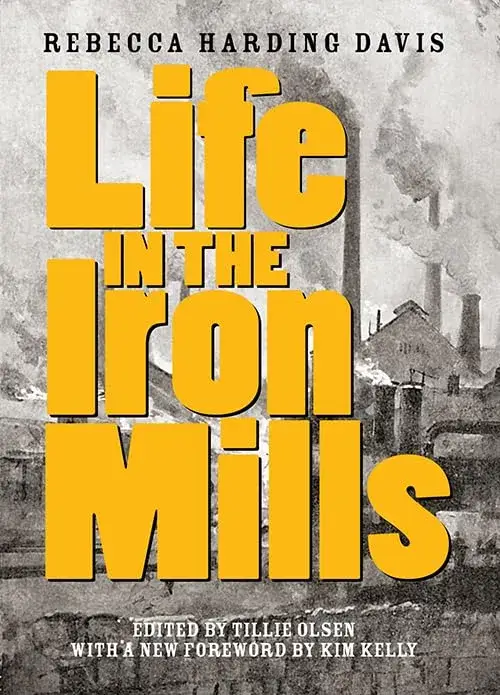
Although not written by Olsen herself, her rediscovery of Rebecca Harding Davis’s 1861 novel, “Life in the Iron Mills,” and subsequent reprinting led her to recover the work of other women authors, lobbying for gender parity within the academic field. The book is considered a transitional work of American realism.
Tillie Olsen’s Political Activism
Tillie Olsen was a Marxist, Communist, feminist and labor activist who focused her work and life around feminist causes, socialism and working-class struggles. From joining the Young Communist League in 1930, she was active in the Omaha Council of the Unemployed. She utilized various aliases such as Teresa Landale and Theta Larimore in order to publish political material within the press. In 1932, Olsen moved to Kansas City, where she was arrested and placed in jail for leafleting, serving five months. Moving to California in 1933, she was again jailed for two weeks following a police raid against radicals.
Awards
Tillie Olsen received a National Endowment for the Arts award, a Guggenheim Fellowship and a doctor of arts and letters degree from the University of Nebraska.
In 1991, she received the Mari Sandoz Award of the Nebraska Library Association.
She was also the winner of the $25,000 Rea Award from the Dungannon Foundation in New York for best short story of 1994.
In 1994, the January 3rd issue of Newsweek commemorated its 60th anniversary with an article entitled “The First Sixty Years.” The editors chose Tillie Olsen as the emblematic author of the 1930s.
‘A Heart in Action’
In 2007, the year of Olsen’s death, a documentary entitled “A Heart in Action” was directed and produced by Ann Hershey. It explored Olsen’s life and literary influence. It included interviews with Olsen herself as well as prominent writers and feminists such as Gloria Steinem, Alice Walker and Florence Howe.
Critical reviews of the film were predominantly positive but mostly limited to feminist and educational publications. It received limited mainstream attention.
Quotes from Tillie Olsen
Olsen was fond of recalling that “Public libraries were my sustenance and my college.”
A strong advocate for the working classes until the end of her life, it was reported in the Washington Post obituary following her death that she would walk through San Francisco’s Tenderloin district, distributing folded dollar bills to the homeless. When issued with “Bless you!” by them, she would respond: “Don’t bless me; curse the system!” punctuated by a kiss.
Authors Who Echoed the Work of Tillie Olsen
- Grace Paley
- Alice Walker
- Vivien Gornick
- Virginia Woolf
- Meridel Le Sueur
- Olive Schreiner
- John Steinbeck

Get recommendations on hidden gems from emerging authors, as well as lesser-known titles from literary legends.